September 27, 2026
How to Get Affordable Contacts Without Insurance
Buying affordable contact lenses is very different from buying affordable eyeglasses. When it comes to vision care, you might think that buying contact lenses is the same as buying eyeglasses, but it's not. Clear vision is not a luxury, it is a fundamental part of how you work, drive, learn, and experience the world. Yet, walking out of an eye clinic with an invoice running into hundreds of dollars can make crisp eyesight feel like an expensive privilege.
Fortunately, having a tight budget does not mean you are locked out of wearing lenses. Navigating the world of vision care can feel confusing and opaque, but with the right approach,. finding affordable contacts is entirely achievable. In this comprehensive guide, we will break down where to find reliable discount contacts, how to secure cheap contact lenses online safely, what to do if you need contact lenses without insurance, and practical ways to slash both your exam and ongoing supply costs.
 Contact Lenses vs. Eyeglasses Costs
Buying contact lenses is more expensive than buying eyeglasses. You might prefer one over the other, so in managing your monthly budget, deciding between glasses and contact lenses often comes down to dollars and cents. Both options help you correct refractive errors, but the cost is different.
Upfront vs. Long-Term Financial Comparison
Understanding the financial trajectory of your eyewear helps prevent unpleasant surprises at checkout.
Initial Purchase Price & Fitting Fees
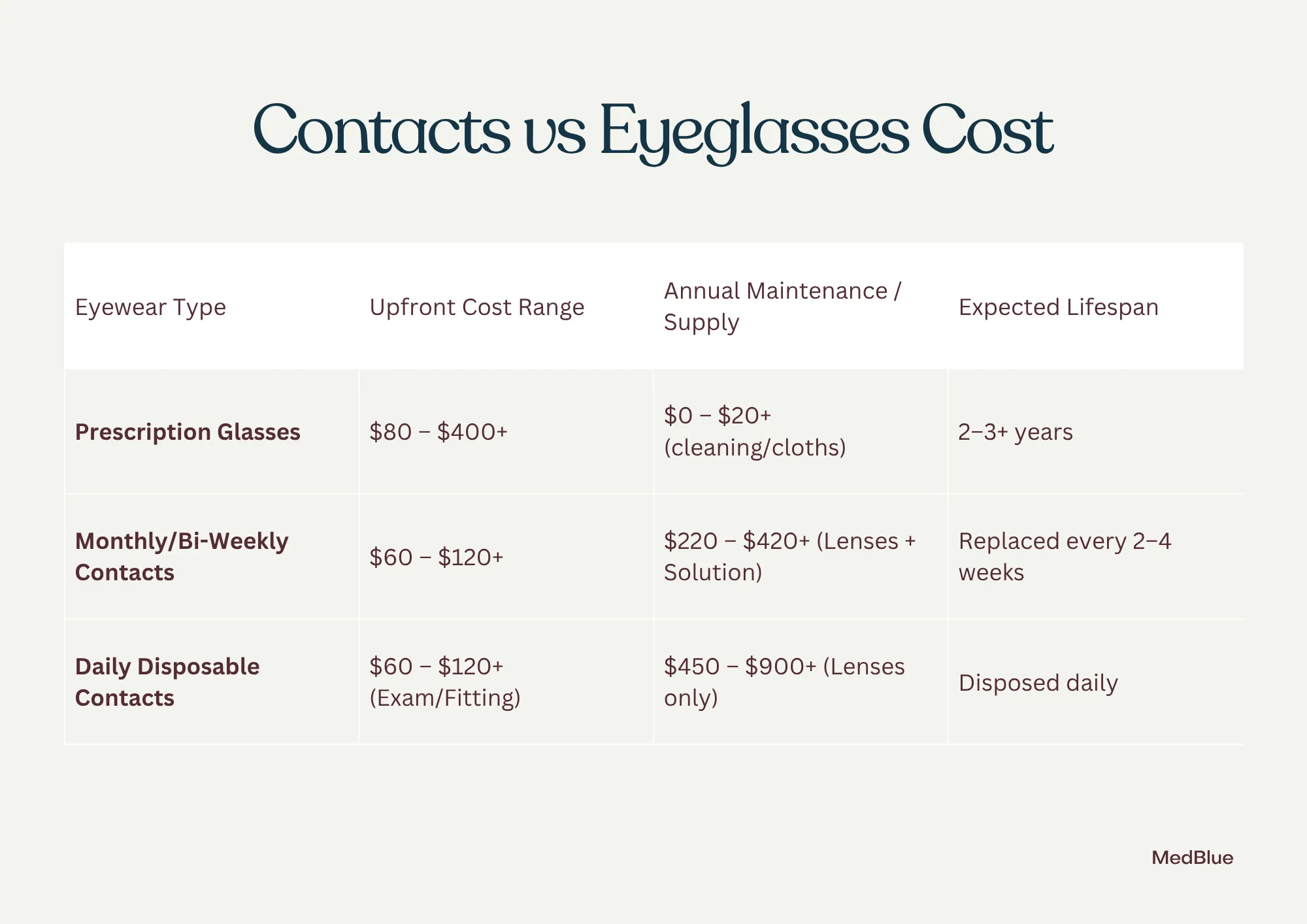
Eyeglasses generally require a larger initial investment. A quality pair of frames and prescription lenses can range from $80 to over $400 upfront, depending on coatings, brand names, and lens materials. However, once you pay that upfront bill, your expenses essentially freeze until your prescription shifts or your frames break.
Contact lenses, by contrast, carry a split initial cost: the comprehensive eye exam plus a dedicated contact lens fitting fee (typically $30 to $100+ out-of-pocket), followed by your first order of lenses.
Annual Replacement Schedules & Maintenance Costs
Where the math really diverges is ongoing maintenance. Eyeglasses need little more than a microfiber cloth and warm water. Contacts are consumable medical devices that require continuous replenishment:
-
Daily Disposables: The most convenient and hygienic option, but usually the most expensive annually ($450–$900/year).
-
Bi-Weekly / Monthly Lenses: More budget-friendly per box ($180–$350/year), but they require multipurpose contact lens cleaning solution and storage cases, which add another $40–$70 annually.
When Are Contacts More Cost-Effective Than Glasses?
Glasses are cheaper to buy, and contacts can actually be more economical or practical in several everyday situations.
Active Lifestyles, Prescription Changes, and Backup Pairs
- High-Index Prescriptions: Strong prescriptions can make high-index, anti-glare eyeglass lenses exceptionally costly. Contact lenses do not suffer from the same optical edge-thickness penalties, keeping lens pricing uniform regardless of correction power.
- Sports and Workplace Demands: If you work in construction, culinary arts, healthcare, or participate in athletics, glasses are prone to fogging, scratching, or breaking. Replacing broken frames twice a year quickly outpaces the cost of budget-friendly contact lenses.
- Hybrid Wear: Many budget-conscious wearers keep an inexpensive pair of glasses for home use and wear daily or monthly contacts strictly for work or social outings, making a single 90-day box supply last six months or more.
How to Get a Prescription for Affordable Contacts
To buy contacts legally in the United States and most regions, you must possess a valid, unexpired contact lens prescription written by a licensed optometrist or ophthalmologist. That means you need an eye exam and can't just use your eyeglasses prescription for your contacts. Following these simple steps will ensure you get your prescription without overpaying.
Step 1: Schedule a Comprehensive Contact Lens Exam
A standard vision test for eyeglasses is not enough to order contacts. Contacts sit directly on your cornea, requiring precise biometric evaluation.
How Contact Lens Exams Differ from Standard Eye Exams
During a contact lens exam, your eye care professional conducts:
- Corneal Topography & Keratometry: Measuring the curvature and slope of your eye surface to determine the correct base curve (BC) and diameter (DIA).
- Tear Film Evaluation: Checking your eye moisture to ensure the lenses won’t cause dry eye syndrome or corneal abrasions.
- Trial Fitting & Slit-Lamp Check: Ensuring the lens centers properly and allows healthy oxygen transmission.
Low-Cost Eye Exam Options for the Uninsured
You do not need an expensive private clinic to get a reliable prescription. If you are paying entirely out-of-pocket:
- Retail Optical Chains: Clinics inside Costco, Sam’s Club, Walmart, and Target Optical frequently offer exams and contact fittings for $80 to $130 total—often half the price of private practices. (Note: You usually do not need a club membership to see an independent optometrist located inside wholesale clubs).
- Optometry School Clinics: University teaching clinics provide thorough care overseen by licensed faculty at significantly discounted rates.
- Community Health Centers: Federally Qualified Health Centers (FQHCs) offer sliding-scale fees based on household income.
Step 2: Request Your Physical Prescription Copy
Never leave the optometrist's office empty-handed.
Your Legal Rights Under the FTC Contact Lens Rule
Under the Federal Trade Commission's (FTC) Contact Lens Rule, your eye doctor is legally obligated to hand you a physical copy of your contact lens prescription as soon as the fitting is complete.
- You do not have to pay an extra fee to receive your paper copy.
- You do not have to buy your contact lenses from their clinic.
- The doctor cannot require you to sign a liability waiver or purchase agreement in exchange for your prescription.
Having this paper document empowers you to shop around freely and find the lowest price on the open market.
Step 3: Identify Your Lens Category & Brand Equivalents
Before buying, talk to your doctor about your budgetary constraints during the fitting process itself.
Daily vs. Bi-Weekly vs. Monthly Wear Cost Trajectories
If minimizing recurring costs is your top goal, ask your doctor to fit you for a reputable monthly disposable lens rather than daily disposables. Monthly lenses dramatically reduce the cost per wear, letting you stretch your vision care budget without sacrificing ocular health.
Smart Strategies for Buying Cheap Contact Lenses Online
The internet has revolutionized optical retail, shifting power back to the consumer. Finding cheap contact lenses online is straightforward once you know how to navigate digital storefronts.
 ### Finding Reputable Online Retailers for Discount Contacts
Online retailers operate with lower overhead than brick-and-mortar optical shops, frequently offering identical manufacturer packs at 20% to 50% discounts.
Price Comparison Tools and Price-Match Guarantees
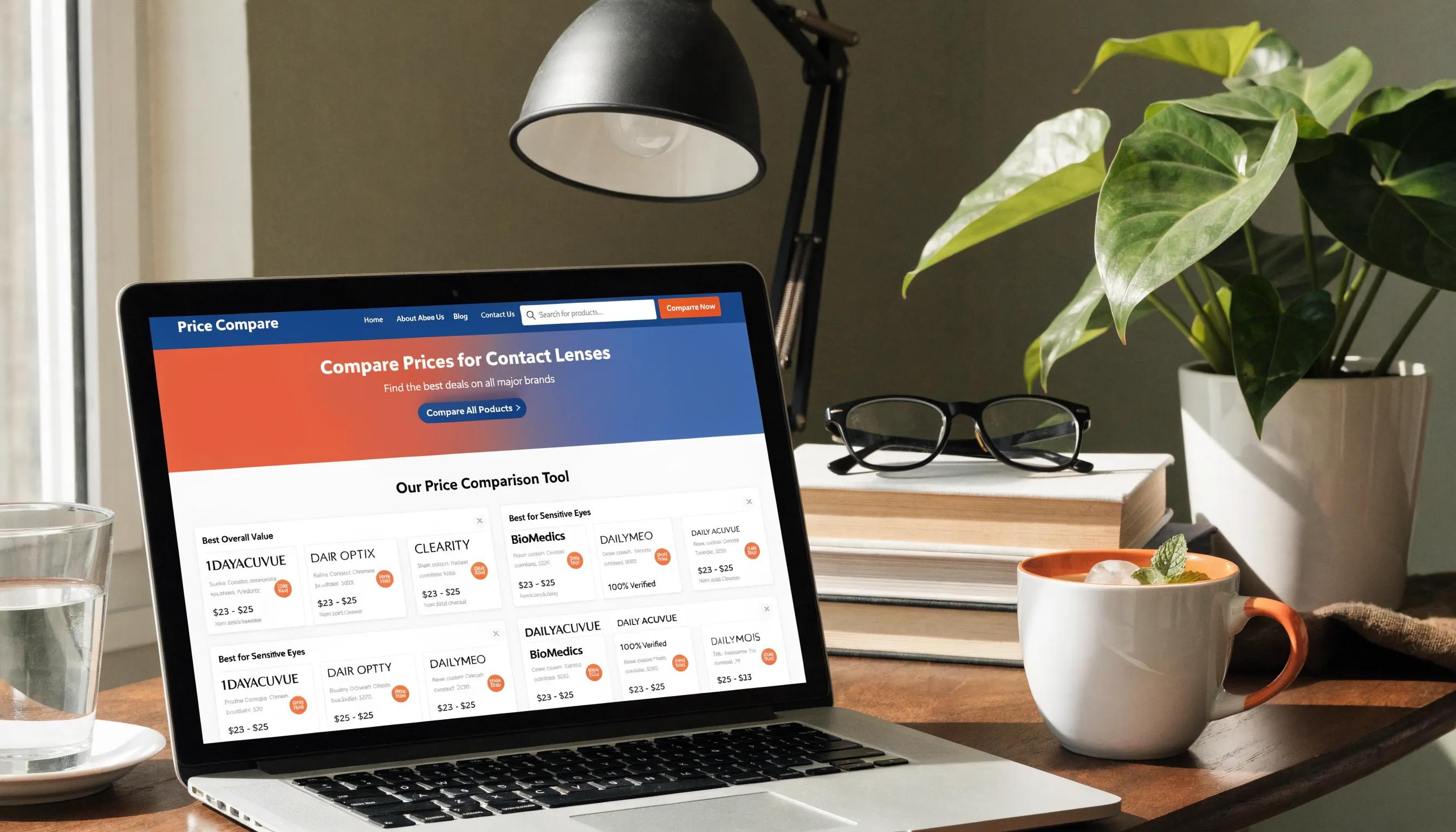
Never buy from the first website you land on. Use dedicated optical price comparison engines or search aggregators to compare base box prices across verified merchants. Furthermore, many major online discount retailers offer price-matching guarantees: if you find a lower price on a competitor's site, customer service will often match it or beat it by an extra percentage.
Watching Out for Hidden Shipping and Processing Fees
A common tactic used by ultra-cheap storefronts is advertising a ridiculously low per-box price (e.g., $15/box) and then slapping on an unavoidable $25 "processing and handling fee" per order at the final checkout screen.
- Always calculate the total delivered cost per box (Total Price ÷ Total Boxes) before entering your payment details.
- Look for coupon codes that offer free standard shipping.
Maximizing Manufacturer Rebates and Subscription Discounts
Strategic purchasing can turn moderate prices into massive savings.
Annual Supply Bulk Purchases vs. Auto-Ship Subscriptions
- Annual Supplies & Rebates: Contact lens manufacturers (such as Alcon, CooperVision, Bausch + Lomb, and Johnson & Johnson) regularly offer mail-in or digital prepaid card rebates ranging from $50 to over $200 when you purchase a full 12-month supply. Combined with low retailer base prices, rebates often make buying a year's supply the cheapest per-day route.
- Auto-Ship Subscriptions: If upfront funds are tight, setting up recurring deliveries often unlocks an instant 5% to 20% discount on every order, with the flexibility to pause or cancel anytime.
FSA / HSA Eligibility for Out-of-Pocket Savings
Contact lenses, fitting fees, and even lens cleaning solutions are 100% qualified medical expenses under Flexible Spending Accounts (FSA) and Health Savings Accounts (HSA). Paying with pre-tax income effectively saves you 15% to 30% depending on your tax bracket.
How to Buy Contact Lenses Without Insurance
Lacking vision insurance can feel like an obstacle, but in reality, standalone vision insurance often comes with monthly premiums and co-pays that barely break even with out-of-pocket savings.
Self-Pay Optimization Strategies
If you are paying out-of-pocket, leverage these alternative discount channels
Utilizing Vision Discount Plans
Even without employer-provided vision insurance, you can access group rates:
- Membership Perks: Programs like AAA, AARP, and certain warehouse clubs include built-in optical discounts on eye exams and lens orders.
- Discount Vision Plans: Unlike traditional insurance, discount plans charge a small annual or monthly fee to grant access to pre-negotiated network prices with no waiting periods or claim forms.
Store Brands and Generic Equivalent Lenses
Many licensed retailers now offer private-label contact lenses manufactured in the exact same certified facilities as brand-name optics. Ask your eye doctor during your exam if they can write your prescription for a high-quality private-label equivalent to save on brand markups.
Common Pitfalls to Avoid When Shopping on a Budget
When money is tight, it can be tempting to cut corners. However, your eyesight is irreplaceable, and certain shortcuts will cost you far more in the long run.
Red Flags: Unauthorized Sellers and Non-Prescription Lenses
- Never buy from sites that don't verify prescriptions: In the US, federal law requires retailers to verify prescriptions with your prescriber before shipping. Any website offering to sell you corrective contacts without checking your prescription is operating illegally and may be distributing counterfeit, expired, or non-sterile lenses.
- Check for verified customer reviews and clear contact details before submitting credit card information.
Safe Hygiene Habits to Prevent Costly Eye Infections
Don't ever try to wear your contacts longer than you should. One of the most dangerous ways people attempt to save money is by "stretching" their lenses and wearing two-week lenses for two months, or sleeping in daily disposables. Over-wearing lenses starves the cornea of oxygen, dramatically increasing the risk of bacterial keratitis and corneal ulcers. The emergency room visits and specialist medications required to treat a severe eye infection will instantly erase years of contact lens savings.
Buy Affordable Contacts Round-Up
Getting high-quality vision care on a budget is completely manageable when you approach it methodically. Book an affordable exam, claim your legal prescription, opt for monthly lenses, compare online prices, and use annual packs for manufacturer rebates, or use HSA/FSA cards to save with pre-tax dollars.
MedBlue has a great program that offers discounts on eye exams and prescription eyewear in addition to doctor visits, diagnostics and imaging, dental visits, and prescription discount care. Check out the plan pages to learn more about getting a health alternative plan with MedBlue. If the page doesn't give you the answers you need, chat with one of our friendly customer support team members to have your questions answered.
FAQ
Here are some ot the most common questions related to buying contact lenses.
Are contact lenses cheaper than glasses?
Contact lenses are more expensive than buying eyeglasses because they require a different examination of your eye. And remember, contact lenses will be sitting on your actual eye while eyeglasses sit on your face.
Can I use my eyeglasses prescription to buy affordable contacts online?
No. An eyeglass prescription cannot be used to purchase contact lenses. Eyeglass lenses sit approximately 12 millimeters away from your eyes, whereas contact lenses sit directly on your cornea. Contact lens prescriptions require specific parameters—including base curve, diameter, and brand-specific cylinder/axis measurements—that are only determined during a contact lens fitting.
What is the cheapest type of contact lens to wear regularly?
Monthly disposable lenses are almost always the most cost-effective option for daily contact lens wearers. While you will need to purchase contact lens multipurpose solution and cases, the annual box cost for monthlies is typically less than half the price of daily disposables.
How much do contact lenses cost per month without insurance?
Without insurance, standard monthly contact lenses generally cost between $15 and $30 per month (plus about $5/month for cleaning solution). Daily disposables typically run between $40 and $75 per month. Prices can be higher if you require toric lenses for astigmatis