September 30, 2026
How To Find The Cheapest Walk-In Clinic Without Insurance
Finding the cheapest walk-in clinic without insurance means using health insurance alternatives that help you reduce the cost of your visit. The typical cost of a visit to a walk-in clinic without insurance can range from $100 to $250 or more if you're paying out of pocket. No one goes to a walk-in clinic because they want to; it's because you have a medical issue that needs immediate attention, and so costs should be the last thing on your mind. However, if you don't have insurance, the cost of the visit might be the first thing on your mind.
This article provides a detailed guide on the costs associated with walk-in clinics, including average prices, state variations, and options to reduce expenses. We'll also discuss how affordable health insurance alternatives can significantly reduce the amount you will pay out of pocket.
 What Is the Average Cost of a Walk-In Clinic Visit Without Insurance?
The typical cost for a walk-in clinic visit without insurance ranges significantly based on various factors, including location and the type of attention your medical issue needs. On average, you can expect to pay between $100 and $250 out of pocket. These costs typically cover basic consultation fees; however, additional treatments, diagnostic tests, or procedures can increase the price.
How Do Walk-In Clinic Prices Vary by State and Location?
Walk-in clinic prices may vary significantly by both state and local markets. For instance, urban settings tend to have higher prices due to high demand and their operational costs, while in rural areas the demand and operational costs are lower, and so your visit may be less expensive.
For example, in states like California, average costs could reach up to $300 for a basic consultation, whereas a walk-in visit in a Midwestern state might average around $150 to $200. Thus, knowing your location can help budget for potential medical expenses effectively.
In addition, this differentiation can help you choose a more cost-effective clinic even within the boundaries of your city. Instead of choosing a walk-in clinic in a downtown location, travel a little outside of the area to the rural areas, and with that, you might be able to save significantly.
Baseline Visit Pricing Breakdown
A standard walk-in visit is billed under tiered service levels.
- Simple/Basic Consultation ($100 – $250): Focuses on a single, uncomplicated symptom such as a mild rash, seasonal allergies, basic sinus congestion, or minor eye irritation.
- Standard Illness Evaluation ($110 – $250): Involves an examination of more complex or multi-symptom complaints, including persistent coughs, ear infections, urinary tract infections (UTIs), flu-like symptoms, or minor sore throats requiring physical assessments.
- Routine Physicals & Health Screenings ($60 – $250): Standard administrative exams, such as sports physicals, camp physicals, or Department of Transportation (DOT) physicals.
- Minor Injury Assessment ($120 – $250): Physical examination of small cuts, first-degree burns, sprains, or insect bites.
What Are Typical Out-of-Pocket Expenses for Uninsured Patients?
Uninsured patients often face various expenses that can accumulate quickly during a visit to a walk-in clinic.
 The typical out-of-pocket expenses can include the basic consultation as well as services like X-rays and blood tests.
Basic Consultation | $100-$250 | Urban areas may have increased costs |
X-rays | $150-$300 | Urban areas may have increased costs |
Blood Tests | $100-$200 | Urban areas may have increased costs |
Minor Procedures (e.g., stitches) | $200-$400 | Urban areas may have increased costs |
These costs represent a few typical expenses that uninsured patients might encounter when seeking care at a walk-in clinic. Comparing these out-of-pocket expenses with those who have insurance reveals that the insured often end up paying significantly less for similar services.
Additional Fees: Diagnostics, Lab Work, and Minor Procedures
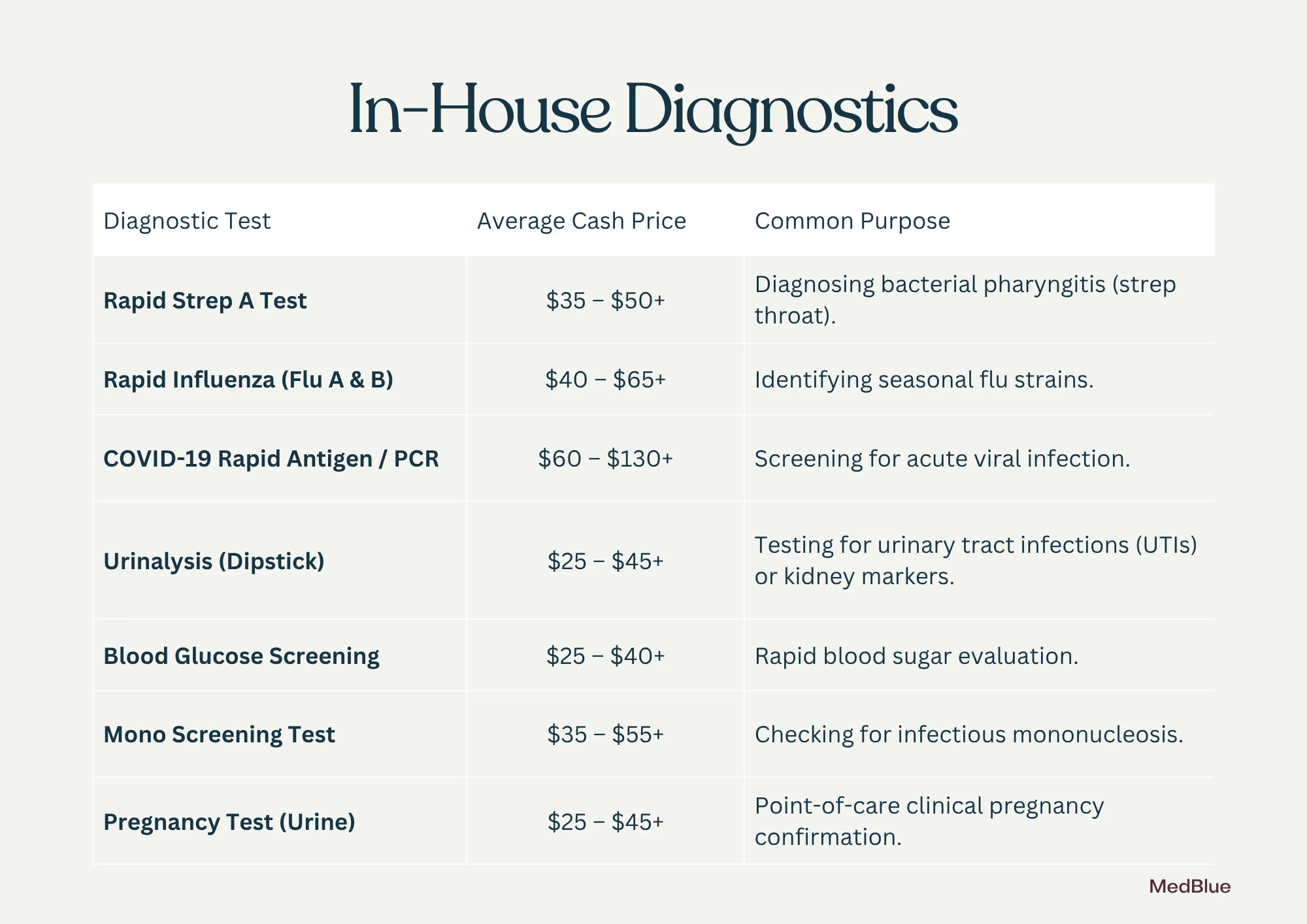
While baseline visit fees cover clinical evaluation, most diagnostic tests and specialized treatments incur separate itemized fees. If you walk in with a suspected strep infection or sprained wrist, your final invoice will reflect the consultation fee plus any diagnostic tests performed on-site.
In-House Point-of-Care Lab Tests
Many walk-in clinics feature point-of-care rapid testing with results delivered during your visit.
 ### Minor Procedures and Treatments
If your visit involves hands-on medical intervention, expect additional procedural charges.
- Ear Wax Removal (Cerumen Impaction): $80 – $115 per ear.
- Simple Suture / Staple Removal: $75 – $120 (for stitches placed elsewhere).
- Minor Suture Placement (Laceration Repair): $150 – $300 (note: retail clinics only close minor, superficial cuts; deeper lacerations are referred to urgent care or the ER).
- Splinting or Basic Bandaging: $80 – $150 (covers materials and application).
- Nebulizer Breathing Treatment: $75 – $135 per session for acute asthma or bronchitis flare-ups.
If you have a minor, localized complaint that does not require an X-ray or extensive surgical intervention, choosing the cheapest walk-in clinic without insurance instead of an urgent care clinic or ER can save hundreds or thousands of dollars.
Which Affordable Healthcare Options Can Reduce Walk-In Clinic Costs?
Instead of wondering how to find the cheapest walk-in clinic without insurance, it is a good idea to look at the affordable healthcare options you have that can reduce your healthcare costs overall. Low-cost medical clinics and urgent care facilities can be more economical alternatives to traditional walk-in clinics.
 If you need affordable medical attention and are looking for the cheapest walk-in clinic without insurance near you, use these strategies to keep out-of-pocket costs manageable.
Use Health Insurance Alternatives
Today, insurance is not the only way to gain access to affordable healthcare. You have many options that can help you reduce your costs.
Subscription Platforms
Subscription platforms like MedBlue provide pre-negotiated discounts on a variety of healthcare services for a monthly or annual fee. Once you sign up, you get lower prices on doctor visits in your area, prescriptions, diagnostics, and telehealth. If you are feeling unwell, you can contact an online doctor for free with MedBlue, and they can help you decide if you need in-person care, or they may be able to diagnose your issue online and provide a prescription.
Healthcare Ministries
Healthcare Ministries are often faith-based, and members pay a monthly or annual fee to be part of the ministry. That money is pooled, and when members have significant health issues, the pooled funds are used to pay for the issue. Some healthcare ministries may include telehealth.
Federally Qualified Health Centers (FQHCs) & Community Health Centers
FQHCs receive federal funding to deliver healthcare regardless of a patient's health insurance status or ability to pay. They have a sliding fee structure based on your income and household size. Some FQHCs also offer walk-in clinics.
Compare National Retail Walk-In Clinics
Major retail pharmacy clinics publish transparent price menus online, eliminating billing ambiguity before you arrive. Major retailers like CVS and Walgreens publish general walk-in costs. Just remember that those costs are just for the visit, and they can increase based upon the help that you need.
Ask for a Discount
It might seem like a simple option, but asking the walk-in clinic for a discount is one of the best ways to get 10% to 30% off the cost of your visit to a walk-in clinic. That's because when you pay upfront, it reduces the clinic's administrative costs, and they should offer this to you.
Consider Virtual Care / Telehealth
If you feel sick, but it's something like a routine sinus infection, mild conjunctivitis, rash evaluation, or prescription refill, telehealth platforms often offer consultations starting at $35 to $65, providing a cost-effective alternative to physical visits.
Utilize Prescription Discount Programs
Walk-in clinic costs include more than the visit as they may prescribe antibiotics, inhalers, or antihistamines. So, it's not just about the initial cost of going to a walk-in clinic, but the added costs. And you can reduce them by paying lower prices at the pharmacy counter:
- Use prescription discount cards. They can often reduce the cost of a prescription by 50% or more. MedBlue offers one within its discount health plan.
Is a Walk-In Clinic Your Best Choice?
Whether you need a walk-in clinic or not depends on the symptoms you are experiencing. If you are feeling unwell with flu-like symptoms, a walk-in clinic, primary care doctor, or telehealth can be a good solution. However, if your issues include shortness of breath and dizziness, then you may need urgent care or a trip to the ER.
Costs for walk-in clinics vary significantly, but you can pay out-of-pocket for your visit. Diagnostics and prescriptions add to that cost. If you are looking for a healthcare solution beyond one visit to a walk-in clinic, then a health insurance alternative program can help you lower your overall healthcare costs by providing you with primary doctor care, discount prescriptions, and reduced rates on diagnostics.
Learn more about the MedBlue health insurance alternative plan by visiting the plans page.
FAQs
Please review some of the most frequently asked questions regarding access to walk-in clinics without insurance. If you have a question that is not on the list, please contact a friendly member of the MedBlue team, and they will be happy to answer your question.
Can I go to a walk-in clinic without insurance?
Yes. All retail walk-in clinics and urgent care facilities accept self-pay patients. You do not need health insurance to receive treatment. You will simply pay out of pocket using cash, a debit card, a credit card, or a Health Savings Account (HSA) / Flexible Spending Account (FSA) card.
Do walk-in clinics require payment upfront?
Yes. The majority of walk-in clinics require self-pay patients to pay the baseline exam fee at check-in. Any additional costs for rapid testing, injections, or minor procedures performed during the exam are settled at checkout.
Can a walk-in clinic prescribe antibiotics without insurance?
Yes. Licensed Nurse Practitioners and Physician Assistants at walk-in clinics can evaluate your symptoms and prescribe antibiotics or other necessary non-controlled medications. You will take the prescription to a pharmacy of your choice and pay the pharmacy directly for the medication.
What should I bring to a walk-in clinic visit without insurance?
To ensure a seamless visit, bring the following.
- A valid government-issued photo ID (driver's license, passport, state ID).
- A form of payment (cash, debit/credit card, HSA/FSA card).
- A complete list of any current medications, supplements, and known drug allergies.
- Proof of income (if visiting an FQHC or community clinic offering a sliding-fee discount).