October 18, 2026
How to Get Prescriptions Without Insurance: Your Guide to Affordable Medications
There is no legal reason for you not to be able to get a prescription without insurance as long as you are willing to pay for it out of pocket. The advantage of having insurance is that the sticker price for many medications becomes lower. However, today you have many options for getting no insurance prescriptions while also getting the advantage of discount pricing through insurance alternatives.
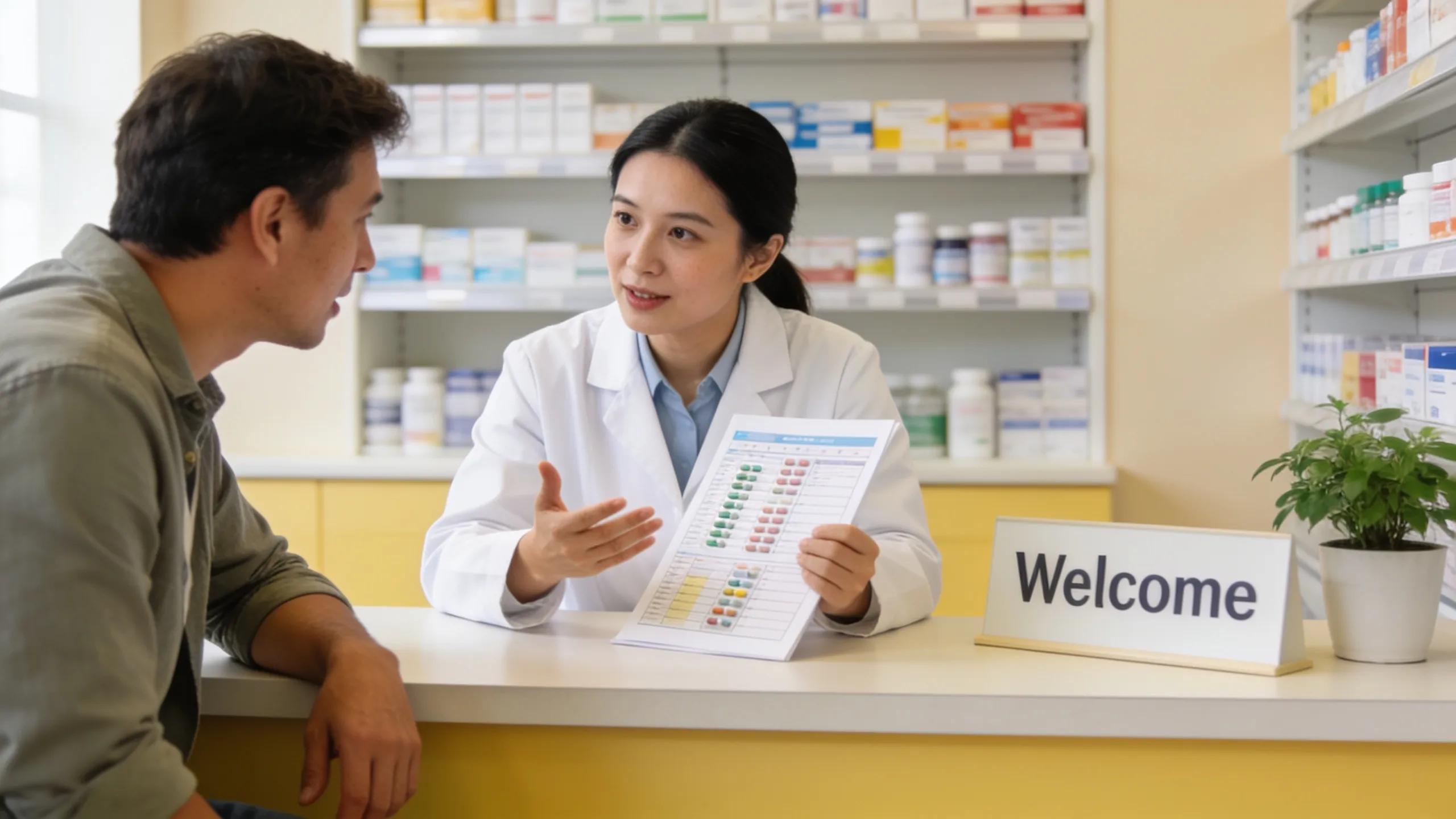 In this guide, you are going to learn about how to get a prescription without insurance through a variety of alternative options including health subscription services, discount cards, and government-funded programs. After reading this guide, you should be able to make an informed decision about how to manage the purchase of your prescriptions without a traditional health insurance plan.
Prescription Discount Options at a Glance
Option | How It Works |
|---|---|
Paying Out of Pocket | You pay the pharmacy's retail cash price directly; prices vary widely by pharmacy, and choosing generics can cut costs significantly. |
Healthcare Membership | You pay a monthly or annual fee for discounted prescription pricing plus access to other services like telehealth and discounted doctor visits. |
Prescription Discount Cards & Programs | You present a free or low-cost card at the pharmacy counter to receive a negotiated discount, often 20% to 80% off, through a Pharmacy Benefit Manager network. |
Government-Funded Access Programs | Programs like Medicaid, Medicare Extra Help, and FQHCs provide free or sliding-scale prescription costs based on income, residency, and eligibility rules. |
Health Sharing Ministries | Members pool monthly contributions to help cover one another's medical and prescription costs, often with lower premiums than traditional insurance. |
Prescription Assistance Programs (PAPs) | Drug manufacturers provide brand-name medications free or at low cost to qualifying uninsured or underinsured patients who complete an application process. |
Paying Out of Pocket for Prescriptions
Paying out of pocket is the most direct method for purchasing medications without insurance. While paying cash for brand-name drugs at retail prices can be expensive, there are several ways you can save money by educating yourself on how the pharmacy pricing model works at different types of pharmacies.
Retail Pharmacy Discounts
Pricing for the same medication can vary by hundreds of dollars depending on where you fill your prescription. For example, major supermarket chains, big-box retailers like Costco or Walmart, and independent community pharmacies frequently offer discounted cash pricing programs for a month or three-month supply of the generic version of certain drugs.
Generic Medications
You can save hundreds of dollars by purchasing the generic versions of brand-name drugs. Doctors aren't necessarily going to provide you with the generic version so you can simply ask the doctor prescribe you the generic version of the drug that is approved by the US Food and Drug Administration (FDA). For example, if you need vyvanse without insurance, your doctor could potentially prescribe the generic equivalent, lisdexamfetamine. By purchasing generic versions, you can reduce your out-of-pocket drug costs significantly.
Benefits
- Immediate Access: You can pick up your medication immediately without waiting for prior authorizations, program approvals, or paperwork processing.
- No Eligibility Barriers: Cash pricing is available to everyone regardless of income, immigration status, employment, or existing health conditions.
- Complete Autonomy: You have full control over which pharmacy you use and are not restricted by insurance network formularies.
Negatives
-
High Costs for Brand-Name Drugs: Brand-name medications, specialty biologics, and newly patented drugs remain prohibitively expensive when paying full retail cash prices.
-
Price Volatility: Cash prices fluctuate wildly between competing pharmacies, requiring constant price comparison shopping on your part.
-
No Deductible Credit: Money spent out of pocket does not count toward any future insurance deductible or out-of-pocket maximum.
Healthcare Membership
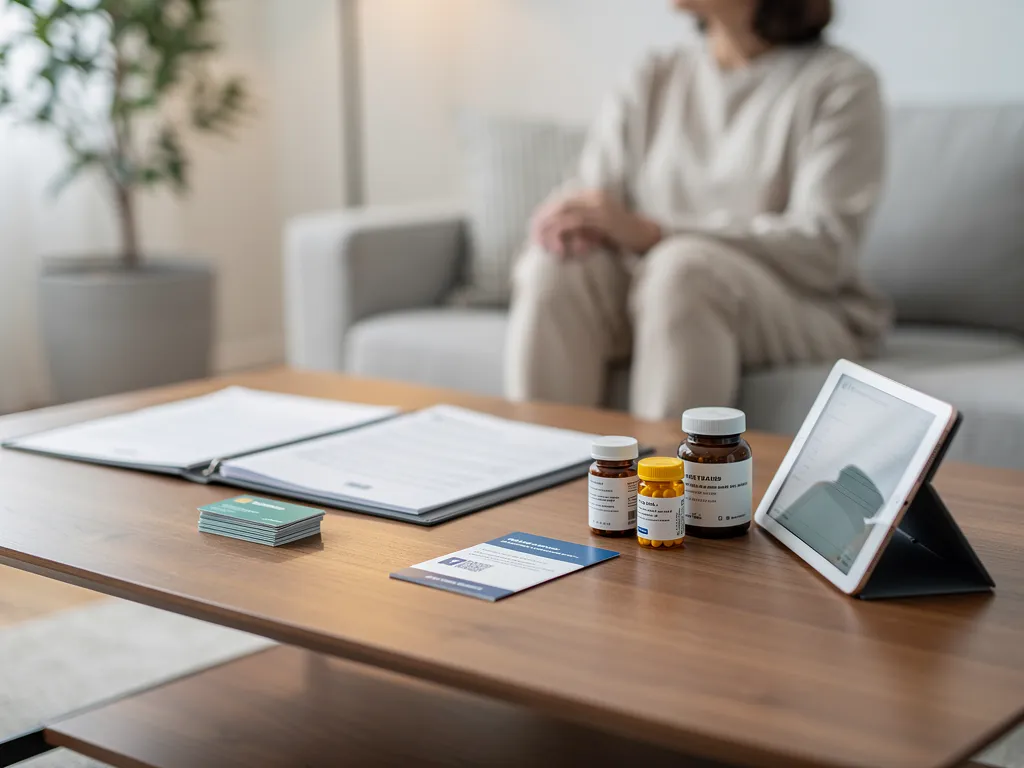 A healthcare membership program is an insurance alternative and gives you discounts on prescriptions as well as lowered costs for many other healthcare services like doctor visits, diagnostics, and imaging. You pay either a monthly fee or an annual fee to gain membership. Certain membership platforms like MedBlue provide access to their services via an online platform once you become a member. And through the platform, you can view discount prices for prescriptions as well as access doctors online to provide you with a prescription after an online evaluation.
Benefits
- You pay a lump-sum fee: (monthly or annually) and get access to significant discounts on a wide variety of medications.
- Comprehensive services: In addition to prescription discounts, you also get access to a variety of other health services like discounted primary care visits, dental visits, diagnostics, and more.
Negatives
- If you want to use telehealth to get prescriptions for controlled substances, you will not be able to, as it is prohibited by law.
Prescription Discount Cards & Programs
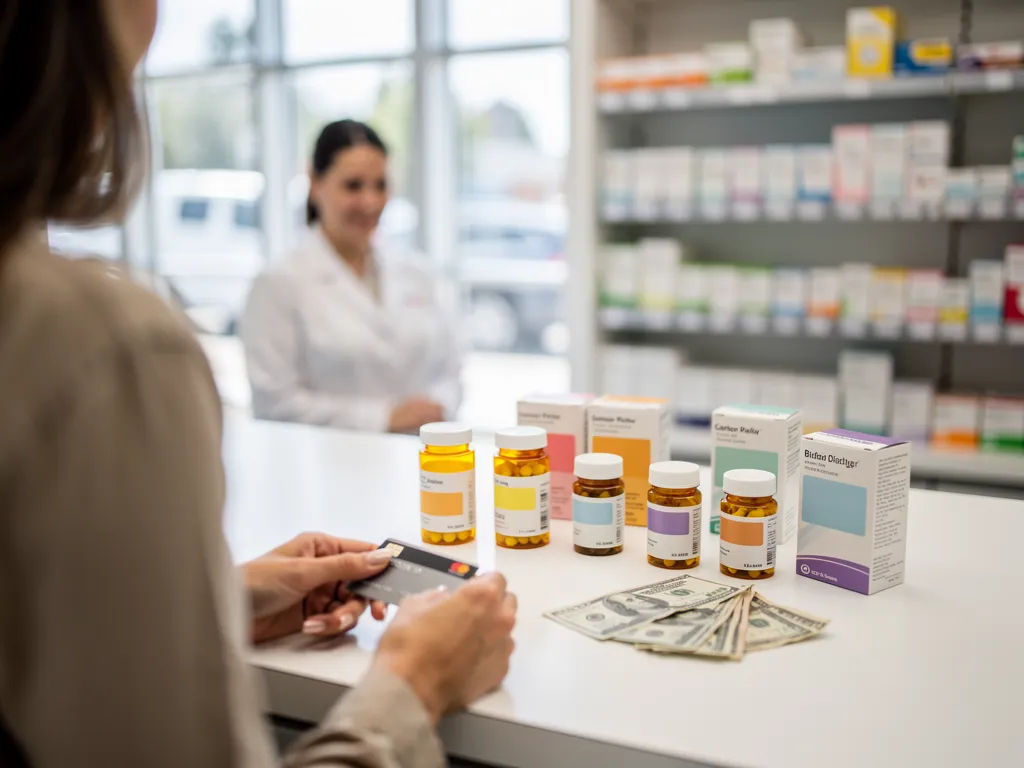 A pharmacist walks over to a customer in a pharmacy.
Prescription discount card programs are a good option when you need a prescription without insurance. Many discount cards are free to sign up for or have tiered-membership levels. The card organizations operate through partnerships with Pharmacy Benefit Managers (PBMs) to negotiate discounted rates with participating pharmacies across the country. Essentially, a discount prescription card is like having a coupon for a prescription.
When you go to get prescriptions without insurance, you show the discount card, and you get a certain percentage off of the price of the drug even though you don't have insurance. Discount cards negotiate different discounts with different pharmacies, so how much of a discount you get can depend on the pharmacy that you visit.
However, the cards do list average discounted prices for a large number of drugs on their website, so you can get a good idea about approximately what you can expect to pay. You can also check with a few local pharmacies to discover what the prescription's cost is without insurance using your discount card. Some health subscriptions like MedBlue can even include a prescription discount card alongside their other services.
Benefits
- Substantial Savings: Users can save anywhere from 20% to 80% off the retail cash price of certain medications.
- Free and Easy to Use: Many discount programs are free or have tiered memberships with a free option.
Negatives
- Discount Amounts Differ: Discounts offered through discount cards can differ across pharmacies. It can be difficult to know how much of a discount you are going to get, as pricing will differ pharmacy to pharmacy based upon the deal the discount card negotiated with each pharmacy.
- Inconsistent Discounts on Brand-Name Drugs: Discounts on patented, brand-name medications are often modest compared to generic savings.
- Data Privacy Concerns: Some discount card providers monetize user data by tracking medication usage trends for market research.
Government-Funded Access Programs
 A woman with a child and two men stand in a pharmacy.
Federal, state, and local governments operate programs designed to help low-income families, seniors, and vulnerable populations gain access to essential healthcare and prescription medications regardless of insurance status.
Medicaid
Medicaid is a joint federal and state program that provides low-cost or free health coverage that includes prescriptions. This program is for low-income adults, children, pregnant women, and people with disabilities.
Medicare Extra Help (Low Income Subsidy)
A federal program assisting eligible Medicare beneficiaries with prescription drug copays, premiums, and deductibles.
Federally Qualified Health Centers (FQHCs)
Federally Qualified Health Centers, which are also known as community health centers, provide primary care and prescription drugs on a sliding scale dependent on your household income and family size. FQHCs can purchase prescription drugs at discounted prices, and they are able to pass those discounts to uninsured patients.
Benefits
- Maximum Financial Relief: Government programs can provide medication at extremely low prices or free if your income status qualifies.
- Protection for High-Cost Conditions: Designed specifically to support individuals who cannot afford essential long-term medical care.
Negatives
- Strict Eligibility Criteria: Qualification depends heavily on state-specific income thresholds, residency rules, and asset limits.
- Bureaucratic Process: Enrollment requires extensive documentation, income verification, and administrative processing time.
- Limited Local Access: Depending on where you live, finding an FQHC or participating 340B clinic within reasonable driving distance can be challenging.
Health Sharing Ministries
Healthcare Sharing Ministries (HCSM) are generally faith-based, non-profit organizations. Members in a health sharing ministry pool their finances together to pay for each other's medical bills, and they also partner with discount networks to help their members with lower costs on medications; in certain serious cases, there can also be a pooling of resources for prescriptions as well. While HCSMs have traditionally been faith-based organizations like Christian health sharing ministries, today there are secular healthcare sharing ministries as well.
Benefits
- Lower Monthly Costs: Monthly contributions are typically lower than unsubsidized commercial health insurance premiums.
- Community Support: Members benefit from a shared community model centered around mutual financial and emotional support.
Negatives
- Pre-Existing Condition Limits: Many ministries restrict or exclude coverage for pre-existing medical conditions and ongoing chronic prescriptions during initial membership years.
- Reimbursement Delays: Members often must pay for prescriptions out of pocket upfront and submit receipts for sharing consideration later.
Prescription Assistance Programs (PAPs)
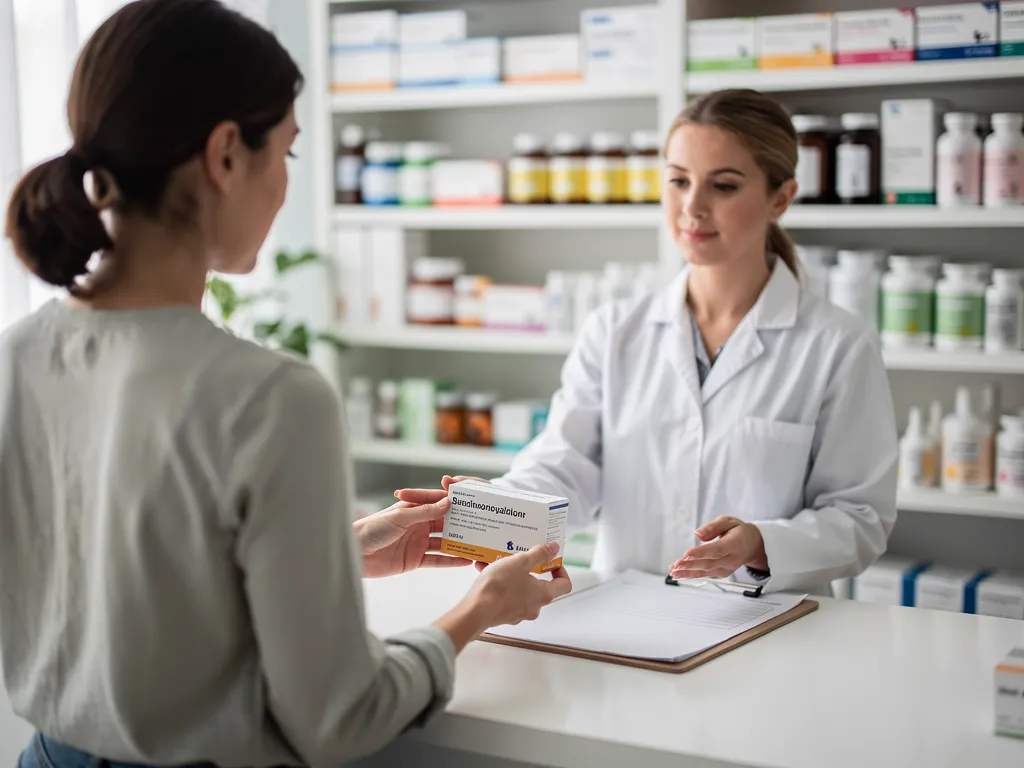 A pharmacist hands a box of medicine to her customer in a pharmacy.
Prescription Assistance Programs (PAPs) are philanthropic initiatives funded directly by pharmaceutical manufacturers to help uninsured and underinsured patients access brand-name medications at little to no cost.
Because developing brand-name medications is costly and drug companies face public pressure over high prices, nearly every major pharmaceutical manufacturer operates a dedicated PAP.
Benefits
- Free Brand-Name Medications: Eligible patients can receive expensive, life-saving brand-name drugs, insulins, and biologics completely free of charge.
- Direct Delivery: Medications are often shipped directly to the patient's home or to their prescribing physician's office in multi-month supplies.
- High Cap Savings: Provides thousands of dollars in annual savings for patients needing specialty care.
Negatives
- Complex Application Process: Requires detailed financial documentation (tax returns, W-2s, pay stubs) and explicit doctor signatures.
- Lengthy Approval Timeline: Applications can take several weeks to process, making PAPs unsuitable for immediate, emergency medical needs.
- Annual Renewal Required: Patients must re-verify their financial eligibility every year to maintain enrollment.
- Not for General Prescription Needs: Best for uninsured patients who require expensive ongoing drugs and are not financially capable of purchasing those drugs.
Practical Strategies for Managing Prescription Costs
In addition to the above choices, you can maximize your savings on prescriptions without insurance by employing these practical strategies:
Consider 90-Day Supplies: Most of the time filling a 90-day supply of generic medication at once is almost always cheaper per dose than buying 30-day fills, and saves on pharmacy dispensing fees.
Find out About Pill Splitting: With your doctor's approval, ask if your medication can be prescribed at double the strength and split in half using a pill cutter. Higher-dose tablets often cost the exact same as lower-dose tablets.
Talk to Your Doctor: Healthcare providers are often unaware of exact retail drug costs. Tell your doctor upfront that you are paying cash so they can select lower-cost generics or sample medications.
Compare Your Local Independent Pharmacy with Retail Pharmacies: Independent community pharmacies often have flexibility to match prices or offer special house discounts that major retail chains cannot.
How to Stay Informed About Updates in Prescription Savings Programs
To get the best prices on prescriptions without insurance, you should stay in the loop about changes happening in different programs. You can do that by subscribing to newsletters, following health advocacy groups online, or regularly consulting with local pharmacies for the latest information.
Lacking health insurance should never stand between you and the vital medications you need. By taking advantage of generic options, using prescription discount programs and government resources, you can significantly lower your prescription expenses.
How MedBlue's Prescription Card Works
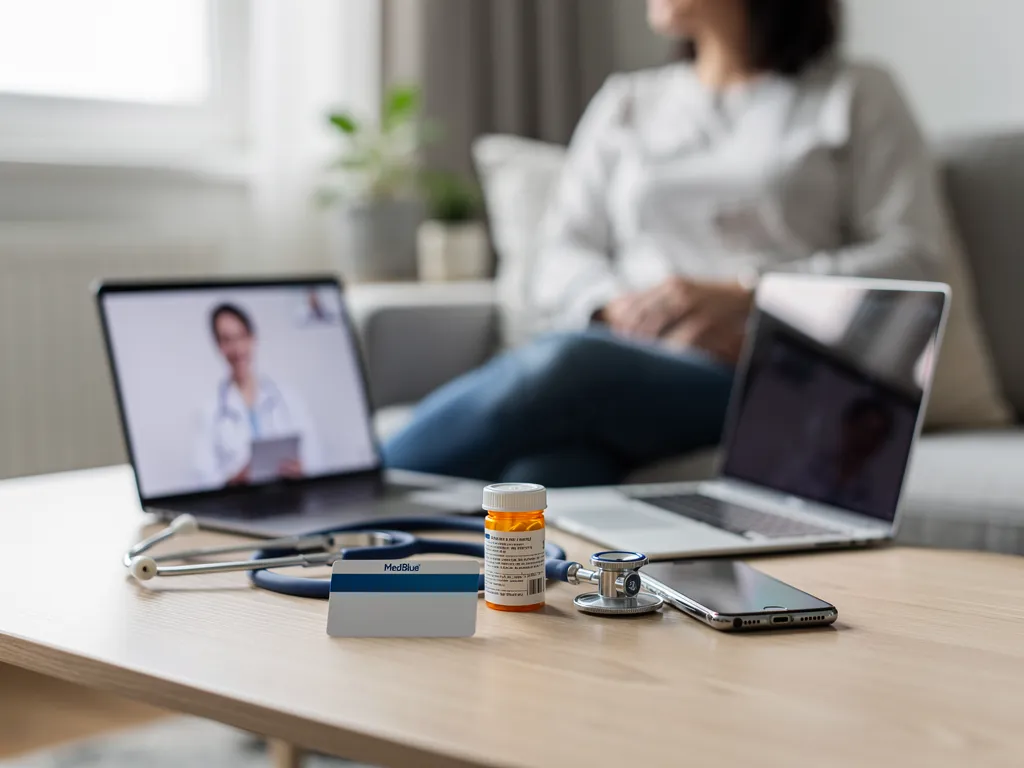 A woman sits on a sofa and on the table near her is an ipad with a virtual doctor on the display.
MedBlue offers a comprehensive health subscription program that includes a discount prescription card alongside discount access to vetted doctors in your community as well as telehealth. With the telehealth component, you can meet with a doctor online who is legally able to prescribe medication. If you want to learn more about MedBlue's program, you can speak with a member of the MedBlue team or review the program page to understand pricing and what a MedBlue membership gets you.
FAQs
Can I get a prescription filled at a pharmacy if I don't have health insurance?
You don't need health insurance to get a prescription filled at a pharmacy across the United States. What you do need is a prescription written by a licensed healthcare provider and a government-issued photo ID. You can then pay for your prescription out of pocket.
How does the cash price for a prescription compare to using a discount card or telehealth service?
A cash price for a prescription will generally be higher than when you use a discount card or a telehealth service that has a discount plan or card associated with it. The cost difference depends on the type of medication and whether or not it is a brand-name drug or a generic drug, as discount programs tend to offer greater discounts on generic drugs.
Can an online or telehealth doctor write a valid prescription if I don’t have insurance?
A licensed health provider online can provide you with a valid prescription after evaluating your medical symptoms. They cannot provide prescriptions for controlled substances in accordance with federal and state laws.
What should I do immediately if I cannot afford a critical or life-saving medication?
If you face an immediate crisis where you cannot afford essential, life-sustaining medication like asthma or insulin, you should talk to your pharmacist. Your pharmacist may be able to suggest low-cost generic alternatives or maybe arrange for an emergency supply until you secure payment. Your doctor may also be able to provide assistance.
For a long-term solution, a Federally Qualified Health Center (FQHC) has access to the federal 340B Drug Pricing Program, which provides low-income or uninsured patients with deeply discounted or free prescription drugs. Certain drug manufacturers sometimes offer Prescription Assistance Programs (PAPs), but those programs typically take a significant amount of time to get qualified for.
How do government-funded prescription assistance programs work?
Government-funded programs assist low-income individuals with medication access through programs like Medicaid, Community Health Centers / 340B Clinics, and State Pharmaceutical Assistance Programs (SPAPs). These programs are typically for low-income adults, children, pregnant women, and people with disabilities. Many of these programs offer treatments based on a sliding scale based on criteria like income and household size.
Are generic medications just as safe and effective as brand-name drugs?
Generic medications are just as safe as brand-name drugs because the U.S. Food and Drug Administration (FDA) requires generic medications to contain the exact same active ingredient, strength, dosage form, safety profile, and route of administration as their brand-name counterparts.
Can I ask a pharmacist to transfer my prescription to a cheaper pharmacy?
If you find a pharmacy that offers the drug you need at a lower price than your pharmacy, you have the right to transfer your prescription over, as you have legal ownership of your prescription. You just need to give your new pharmacy the prescription name, doctor details, and current pharmacy information, and they should be able to handle the transfer.
Can a pharmacy refuse to fill my prescription if I don’t have insurance?
A pharmacy cannot refuse to fill a prescription simply because you lack health insurance. However, a pharmacist has the legal and professional right to decline filling a prescription if it is illegible, appears fraudulent, the prescribing practitioner’s license is invalid, or if there is a medical safety conflict due to a dangerous drug interaction. They can also decline to fill your prescription if you aren't willing to pay for the full cash price or discount card price for the drug.