October 9, 2026
How Much is an Ultrasound Without Insurance?
There is no one number when you are trying to figure out how much is an ultrasound without insurance, and that's because there are many different types of ultrasounds. In addition to that, there are a variety of providers for ultrasounds, and costs for your ultrasound will depend on the provider you choose. And on top of that, if you don't have insurance, you have a variety of ways to reduce your out-of-pocket costs.
In this guide, you're going to learn about where to get an ultrasound without insurance, and how you can reduce your costs. We'll also talk about what an ultrasound is and the different types of ultrasounds. By the end of the guide, you will have enough information to choose the best provider and health insurance alternative to reduce your costs for an ultrasound.
What Is an Ultrasound?
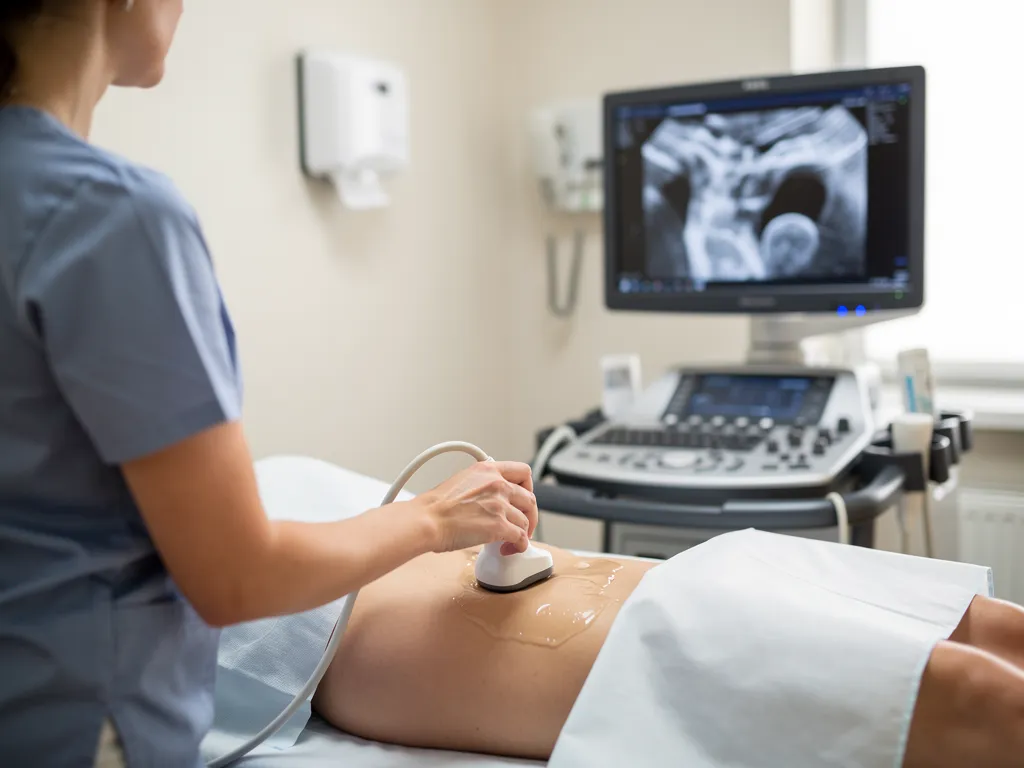 An ultrasound is a simple, painless test that uses sound waves, not radiation, to let a doctor see what's happening inside your body. During the exam, a trained technician called a sonographer spreads a bit of gel on your skin and moves a small handheld device, called a transducer, over the area being checked.
That device sends out sound waves pitched far too high for the human ear to hear. As those waves travel through your body, they bounce off different tissues, like muscle, fat, fluid, and bone, in slightly different ways. The transducer picks up these echoes, and a computer turns them into the images your doctor sees on screen, either still pictures or live video of what's moving, like a heartbeat or a baby in the womb.
Because ultrasound doesn't use radiation the way a CT scan or X-ray does, it's one of the safest imaging tools in medicine. That's why it's the standard choice for checking on a baby during pregnancy, and why doctors reach for it first when examining sensitive areas like the thyroid, the breasts, or a child's body.
Understanding Ultrasound Billing: Technical Fee vs. Professional Fee
Ultrasound billing can be confusing because it is made up of a technical fee and a professional fee.
Technical Fee
This component covers the physical overhead of performing the examination. It accounts for the clinical suite, the maintenance and depreciation of high-end sonography machines, disposable supplies (acoustic transmission gel, sterile probe covers, sanitary drapes), and the labor of the certified diagnostic medical sonographer who operates the equipment and acquires the image sets.
Professional Fee
This component covers the cognitive and clinical labor of a board-certified physician—typically a diagnostic radiologist, cardiologist, or maternal-fetal medicine specialist. The interpreting physician reviews every static image and dynamic cine loop, evaluates anatomical measurements against normative clinical indices, correlates findings with patient medical history, and dictates a comprehensive diagnostic medical report.
Before booking an appointment, ask for the global cash price, which must include both fees.
The Different Places You Can Get an Ultrasound
 A - self pay ultrasound near me - search is going to give you many providers in your area because there are a variety of providers that offer ultrasounds, and each type of provider will give you a different price. So that means it's important for you to know what type of provider may be best for you. Below are some of the most common places you can get an ultrasound.
Hospital Outpatient Departments
Hospitals offer the widest range of ultrasound services and same-day access to subspecialist radiologists, which makes them a reasonable choice for complex or urgent studies. However, hospital-owned outpatient departments carry heavy administrative overhead, and that overhead is passed on to patients through chargemaster rates and separate facility fees, making them the most expensive setting for a routine, non-emergency scan.
Freestanding Imaging Centers
Independent, freestanding imaging centers focus exclusively on outpatient diagnostic radiology. Because they operate without hospital facility fees or emergency department overhead, they typically offer transparent cash prices far below hospital rates for the same exam, performed on comparable equipment and read by board-certified radiologists.
Urgent Care Clinics
Many urgent care centers have in-house ultrasound capability or a direct relationship with a nearby imaging facility, making them a convenient option for patients who need a same-day order for a non-emergency concern without the wait or expense of an emergency room.
Physician and Specialist Offices
Obstetricians, cardiologists, and other specialists frequently perform ultrasounds directly in their own offices as part of a scheduled visit, such as a routine prenatal scan or an echocardiogram ordered to evaluate a heart condition. These in-office scans can simplify scheduling, though self-pay patients should still confirm the price in advance.
Direct Primary Care (DPC) Practices
Some Direct Primary Care physicians use compact Point-of-Care Ultrasound (POCUS) devices to perform targeted scans right in the exam room, often at no added charge for members, and can refer patients to a freestanding imaging center for more comprehensive studies at a negotiated cash rate.
Community Health Centers (FQHCs)
Federally Qualified Health Centers and other community clinics serve patients regardless of insurance status or ability to pay. While smaller FQHC locations may not have an ultrasound machine on site, they commonly maintain referral agreements with local hospitals or imaging centers to provide subsidized diagnostic imaging to qualifying patients.
What Are the Different Types of Ultrasounds?
 The ultrasound is often associated with pregnancy, but there are numerous other ultrasound applications. Ultrasounds can be used to evaluate a variety of issues in the body, and the cost for the ultrasound is dependent on the area being examined.
Abdominal Ultrasound
Average Self-Pay Cost: $250 – $600+
An abdominal ultrasound provides comprehensive, real-time visualization of the major metabolic, digestive, and vascular organs situated within the peritoneal cavity. Physicians routinely order abdominal sonograms to evaluate localized right-upper-quadrant abdominal pain, unexplained nausea, jaundice, abnormal liver function tests (elevated ALT/AST enzymes), and suspected renal stones.
Abdominal sonography also serves as the frontline screening tool for Abdominal Aortic Aneurysms (AAA), identifying potentially life-threatening vascular dilatations in at-risk populations. To ensure optimal image quality, patients are required to fast for 6 to 8 hours prior to the scan.
Pelvic & Transvaginal Ultrasound
Average Self-Pay Cost: $250 – $700+
Pelvic sonography evaluates the internal reproductive anatomy and lower urinary tract in female and male patients. In female health, figuring out how much is a transvaginal ultrasound is a common query, as it is the primary imaging modality for diagnosing uterine fibroids (leiomyomas), adenomyosis, endometrial polyps, ovarian cysts, polycystic ovary syndrome (PCOS), tubo-ovarian abscesses, and the structural etiology of abnormal uterine bleeding or chronic pelvic pain. Pelvic imaging frequently incorporates transabdominal pelvic and transvaginal ultrasounds.
Obstetric & Pregnancy Ultrasounds (2D, 3D, and 4D)
Average Self-Pay Cost: $300 – $800+
Pregnancy ultrasounds are one of the most important parts of prenatal care. Your doctor, midwife, or family physician will order these scans at different points in your pregnancy to check on you and your baby. Early on, a scan confirms the pregnancy is developing in the right place, checks for a heartbeat, and measures the baby to estimate your due date. Some parents also choose an early genetic screening scan around this time.
Later, usually around 18 to 20 weeks, you'll have a more detailed anatomy scan. This is when the sonographer takes a close look at the baby's heart, brain, spine, kidneys, and limbs to make sure everything is developing normally. In the third trimester, additional scans may be used to track the baby's growth, check the amniotic fluid level, see how the placenta is positioned, and monitor blood flow through the umbilical cord.
It's worth knowing the difference between these medical scans and the "keepsake" 3D or 4D ultrasounds offered at boutique studios. Those sessions are meant to give parents a fun, detailed look at the baby's face or movements, usually for $100 to $350, and they don't require a doctor's order. But they aren't a substitute for the standard 2D scans your provider orders, which are read and reported on by a physician and typically run $300 to $800. The boutique photos are a nice extra, not a replacement for the medical exam.
Echocardiogram
Average Self-Pay Cost: $400 – $1,500+
An echocardiogram is an ultrasound of your heart. A cardiac sonographer uses the same handheld wand and gel you'd see in any ultrasound, but moves it across your chest to capture moving pictures of your heart as it beats. Your doctor uses those images to see how well your heart is pumping, how thick its walls are, whether any fluid has built up around it, and how smoothly blood is flowing through its chambers and valves. One of the key numbers your doctor looks for is called the ejection fraction, which is basically a measure of how much blood your heart pushes out with each beat.
How much is an ultrasound without insurance for an echocardiogram depends on the provider you use. If your doctor requests this, it means you need this ultrasound, and costs shouldn't be on the forefront, but often they are. When you get to the sections below, you'll see how to reduce your costs.
Thyroid & Neck Ultrasound
Average Self-Pay Cost: $200 – $500+
A thyroid and neck ultrasound takes a close look at the structures in your neck, especially your thyroid gland, using a small handheld wand pressed gently against your skin. Because the thyroid sits so close to the surface, this scan gets a clear, detailed picture without needing anything more invasive.
Doctors order this scan most often to check out a lump or swelling you or your doctor noticed, to keep an eye on nodules that are already known about, or to look into conditions like an enlarged thyroid (goiter) or inflammation such as Hashimoto's or Graves' disease. It's also used to check lymph nodes in the neck when something seems off.
Breast Ultrasound
Average Self-Pay Cost: $200 – $600+
A breast ultrasound is often the next step after a mammogram or a lump you or your doctor noticed during an exam. It uses sound waves instead of radiation, so it's safe to use as often as needed, and it works especially well for women with dense breast tissue, where mammograms can have a harder time spotting small changes.
During the scan, a technician moves a small wand over the breast with a bit of gel to get a clear picture of what's going on underneath. It helps doctors tell the difference between a simple fluid-filled cyst, which usually isn't a concern, and a solid lump that might need a closer look with a biopsy. If a biopsy is needed, doctors can even use the ultrasound to guide the needle precisely to the right spot.
This scan is also commonly used to check on breast pain, unusual discharge, or the condition of breast implants. Because it doesn't involve radiation, it's often the first choice for pregnant women and younger women who need a breast lump checked out.
Vascular & Doppler Ultrasound (Carotid & Extremities)
Average Self-Pay Cost: $300 – $800+
A vascular ultrasound, sometimes called a Doppler ultrasound, checks how well blood is moving through your arteries and veins. It's a painless way for doctors to spot clots, blockages, or narrowing without an invasive procedure. Depending on what your doctor is looking for, the scan usually falls into one of a few categories:
- Leg or Arm Vein Ultrasound: This is the go-to test for finding a blood clot (DVT) in the deep veins of an arm or leg, a condition that can be dangerous if the clot breaks loose and travels to the lungs. It's also used to check for varicose veins and other vein problems.
- Carotid Artery Ultrasound: This looks at the arteries in the neck that supply blood to the brain, checking for plaque buildup or narrowing that could raise the risk of stroke. Your doctor uses the results to decide whether you need closer monitoring, medication, or surgery.
- Arm or Leg Artery Doppler: This checks for poor circulation or blockages in the arteries of the arms or legs, often used when someone has pain, cramping, or numbness caused by reduced blood flow.
Scrotal & Testicular Ultrasound
Average Self-Pay Cost: $250 – $550+
This scan gives doctors a clear look at the testicles and the surrounding scrotal area. It's most urgent when someone has sudden, severe pain, since it can check for testicular torsion, a twisted blood supply that needs emergency surgery to save the testicle. Doctors also use it to check out lumps, swelling, injuries, infections, or fluid buildup (hydroceles), and to find varicoceles, enlarged veins that can sometimes affect fertility. Because a lump you can feel isn't always a tumor, often it's just a harmless cyst, this scan helps your doctor tell the difference without guesswork.
Musculoskeletal (MSK) Ultrasound
Average Self-Pay Cost: $200 – $500+
A musculoskeletal, or MSK, ultrasound takes a close look at your muscles, tendons, ligaments, nerves, and joints. Unlike an MRI, this scan happens in real time, so the doctor can actually watch a joint move while checking it, bending your elbow or rotating your shoulder to see a tendon or ligament in action instead of just a still picture.
It's commonly used for a torn rotator cuff, tennis or golfer's elbow, Achilles tendon problems, plantar fasciitis, carpal tunnel syndrome, and other nagging joint or tendon pain. Doctors also use it to guide needles precisely when giving joint injections like cortisone, hyaluronic acid, or PRP, right into the exact spot that needs treatment.
Here's a quick side-by-side look at the different ultrasound types covered in this guide, what each one checks for, and typical self-pay pricing.
Ultrasound Type | What It's Used For | Average Self-Pay Cost |
|---|---|---|
Abdominal Ultrasound | Checking the liver, gallbladder, kidneys, and other abdominal organs; evaluating pain, nausea, jaundice, or abnormal liver tests; screening for abdominal aortic aneurysm | $250 – $600+ |
Pelvic & Transvaginal Ultrasound | Evaluating the uterus, ovaries, and lower urinary tract; diagnosing fibroids, ovarian cysts, PCOS, or the cause of abnormal bleeding and pelvic pain | $250 – $700+ |
Obstetric & Pregnancy Ultrasound (2D/3D/4D) | Confirming a pregnancy, checking the baby's heartbeat and growth, detailed anatomy scans, and monitoring the placenta and amniotic fluid | $300 – $800+ |
Echocardiogram | Looking at how well the heart is pumping, checking heart valves, and investigating chest pain, shortness of breath, or an irregular heartbeat | $400 – $1,500+ |
Thyroid & Neck Ultrasound | Examining thyroid nodules, swelling, or lumps in the neck, and monitoring conditions like goiter or thyroiditis | $200 – $500+ |
Breast Ultrasound | Following up on a mammogram finding or a lump, telling a fluid-filled cyst apart from a solid mass, and guiding breast biopsies | $200 – $600+ |
Vascular & Doppler Ultrasound | Checking blood flow in the arteries and veins; detecting blood clots (DVT), carotid artery narrowing, or peripheral artery disease | $300 – $800+ |
Scrotal & Testicular Ultrasound | Evaluating sudden testicular pain, lumps, swelling, or fertility-related concerns like varicoceles | $250 – $550+ |
Musculoskeletal (MSK) Ultrasound | Looking at muscles, tendons, and joints in motion; diagnosing issues like rotator cuff tears or tennis elbow, and guiding joint injections | $200 – $500+ |
Health Insurance Alternatives for Ultrasound Discounts
Beyond standard cash-pay discounting at freestanding imaging centers, innovative healthcare delivery models provide structured avenues for affordable diagnostic imaging.
Direct Primary Care (DPC) Memberships
Direct Primary Care (DPC) is a modern healthcare delivery model that eliminates insurance intermediaries entirely. In a DPC practice, patients pay a transparent, flat monthly membership fee that can range from $60 to $110 per month directly to their primary care physician clinic. In exchange, members receive unrestricted access to clinical visits and discounts on ultrasounds.
Medical Cost-Sharing Programs
Medical cost-sharing organizations, often referred to as healthshares, are non-profit community sharing arrangements where members contribute monthly funds to assist one another with large, unexpected medical expenses. Healthshares are not commercial health insurance plans; rather, they operate under the legal framework of healthcare cost-sharing ministries and peer-to-peer sharing communities.
Healthshare members engage with the healthcare system as empowered cash-pay patients. When a member requires an ultrasound, they request a discounted self-pay cash quote from an outpatient imaging center. For minor diagnostic needs, the member pays the low cash price directly out-of-pocket. If the ultrasound is part of a larger medical incident.
Medical Discount Programs & Cash-Pay Imaging Marketplaces
Cash-pay imaging marketplaces are online platforms, like MDsave or RadiologyAssist, that let you shop for your exact ultrasound, pick a nearby imaging center, and buy a single prepaid voucher at a set price. That price covers everything up front: the facility, the technician, and the radiologist's reading, so there's no membership to join and no surprise bill afterward. You just show up for your appointment, hand over the voucher, and you're done.
Community Health Centers & FQHC Sliding-Fee Scales
For individuals experiencing financial hardship, low income, or long-term unemployment, Federally Qualified Health Centers (FQHCs) and community health clinics provide a vital healthcare safety net. Funded in part by federal Health Resources and Services Administration (HRSA) grants, FQHCs are legally required to provide comprehensive primary medical care and supportive services to all patients, regardless of health insurance status or ability to pay.
FQHCs operate on a mandated Sliding Fee Discount Schedule tied directly to the Federal Poverty Level (FPL). Patients whose household income falls below 100% of the FPL receive medical visits and diagnostic testing for a nominal administrative fee (often $20 to $40).
 ### Discount Plan Organizations
A Discount Plan Organization (DPO)r is another option worth knowing about if you don't carry traditional health insurance. Unlike insurance, a DPO doesn't pay your medical bills for you. Instead, you pay a modest monthly membership fee, often starting around $40 a month, and in return you get access to pre-negotiated discounted rates for ultrasounds as well as with doctors, dentists, and a variety of diagnostic and imaging providers.
For ultrasounds specifically, a DPO membership can connect you with imaging providers who've already agreed to lower, member-only cash prices, so you skip the guesswork of calling around for quotes.
It's worth remembering that a DPO is a discount arrangement, not insurance, so you're still responsible for paying the provider directly; the membership just lowers what you owe. Most plans, including MedBlue's, also offer a short cancellation window early on, so you can try the plan without feeling locked in.
Cost of an Ultrasound Without Insurance
Ultrasound costs vary widely depending on the type of scan, the provider, and whether a patient is paying out of pocket. Self-pay patients generally find the most affordable prices at freestanding imaging centers and cash-pay marketplaces, and can lower costs further through alternatives to traditional insurance such as DPC memberships, medical cost-sharing programs, DPOs, and FQHC sliding-fee clinics.
Comparing these options ahead of time can help you find an ultrasound price that fits your budget. MedBlue provides a health insurance option that gives you access to discount pricing plans on ultrasounds as well as doctor visits, dental, vision, prescriptions, and more.
Frequently Asked Questions
Can you get a diagnostic ultrasound without a doctor's order?
In the United States, federal healthcare regulations, state medical practice acts, and FDA radiation/medical device classifications mandate that all diagnostic medical ultrasound examinations must be performed pursuant to a valid medical order written by a licensed healthcare provider (MD, DO, NP, or PA).
Is the radiologist's interpretation fee included in a self-pay quote?
Not always, which is why self-pay patients must remain vigilant regarding medical billing terminology. In healthcare billing, imaging costs are frequently split into a technical component (the facility and sonographer) and a professional component (the radiologist's diagnostic reading). Many hospital billing departments and some private clinics only quote the technical fee when asked for pricing, leading to an unexpected separate invoice from the contracted radiology group weeks later. When obtaining pricing or reviewing your Good Faith Estimate, always confirm that you are receiving a "Global Self-Pay Rate" that bundles both the technical scanning fee and the professional physician interpretation fee into one final, all-inclusive price.
Urgent Care vs Emergency Room: What are the cost differences for ultrasound imaging?
Urgent care centers are designed to treat non-life-threatening medical issues and typically operate with leaner overhead costs. Consequently, ultrasounds performed at urgent care facilities generally come with substantially lower fees, often closer to freestanding outpatient imaging center rates, which range roughly from $200 to $600 depending on the type of exam.
In contrast, emergency rooms provide comprehensive care for acute, severe, or life-threatening conditions and maintain extensive infrastructure and specialist availability. ER visits integrate facility fees, physician services, urgent diagnostic imaging, and potential inpatient care, which results in significantly higher costs. Ultrasound exams in an ER setting may cost from $1,000 to several thousand dollars due to hospital facility fees, higher staffing costs, and added administrative charges.
Can I use Health Savings Account (HSA) or Flexible Spending Account (FSA) funds for self-pay ultrasounds?
Yes. Diagnostic ultrasound examinations ordered by a licensed physician to evaluate, diagnose, monitor, or treat a medical symptom, condition, or pregnancy are classified as qualified medical expenses under Internal Revenue Code Section 213(d). Consequently, you can pay for your out-of-pocket ultrasound expenses using pre-tax funds from a Health Savings Account (HSA), Flexible Spending Account (FSA), or Health Reimbursement Arrangement (HRA).