September 30, 2026
How Much Is Urgent Care Cost Without Insurance?
Urgent care cost without insurance can range between $150 to $300 or more depending on the kind of care you need. Urgent care services provide immediate medical attention for non-life-threatening conditions, and they can be a more cost-effective alternative to emergency rooms.
This article tells you how much urgent care costs without insurance, focusing on key factors influencing prices, comparisons to emergency room costs, and potential self-pay options. Understanding these aspects will help you understand costs for urgent care and also understand the healthcare alternatives available to you.
 What Are the Average Urgent Care Costs Without Insurance?
The average costs for urgent care services for uninsured patients typically range from $150 to $300. These costs can fluctuate significantly based on multiple factors, including geographic location, the complexity of the medical issue, and whether additional tests or treatments are involved.
Understanding the Breakdown: Base Fees vs. Add-On Services
One of the most confusing aspects of medical billing is the difference between a consultation fee and total visit costs. When you walk into an urgent care center as a self-pay patient, your final receipt is usually divided into two distinct categories:
The Base Evaluation & Management (E&M) Fee
This is the flat rate charged simply to be evaluated by a healthcare professional (a medical doctor, physician assistant, or nurse practitioner). It covers taking your vital signs, reviewing your medical history, performing a physical examination, and formulating a treatment plan.
Ancillary Services & Add-Ons
Any test, medication, or medical supply beyond the basic examination incurs an additional fee. This includes point-of-care rapid testing, venipuncture, radiologic imaging, wound closure materials, bandages, and injections.
Which Factors Influence Urgent Care Prices for Self-Pay Patients?
Two of the biggest factors affecting the cost of what you are going to pay at an urgent care clinic are geographic location and medical need.
Geographic Location
Geographic location plays a crucial role, so that means if you live in a big city, your costs can be higher, and if you live in a rural area, the costs can be lower.
Medical Need
The nature and complexity of the medical issue also impact pricing; a straightforward consultation will generally cost less than a visit requiring extensive testing or treatment. Lastly, while insurance dynamics primarily influence prices, self-pay patients may find significant variations in pricing based on the facility they choose.
How Does the Cost of Walk-In Clinics Compare to Urgent Care Centers?
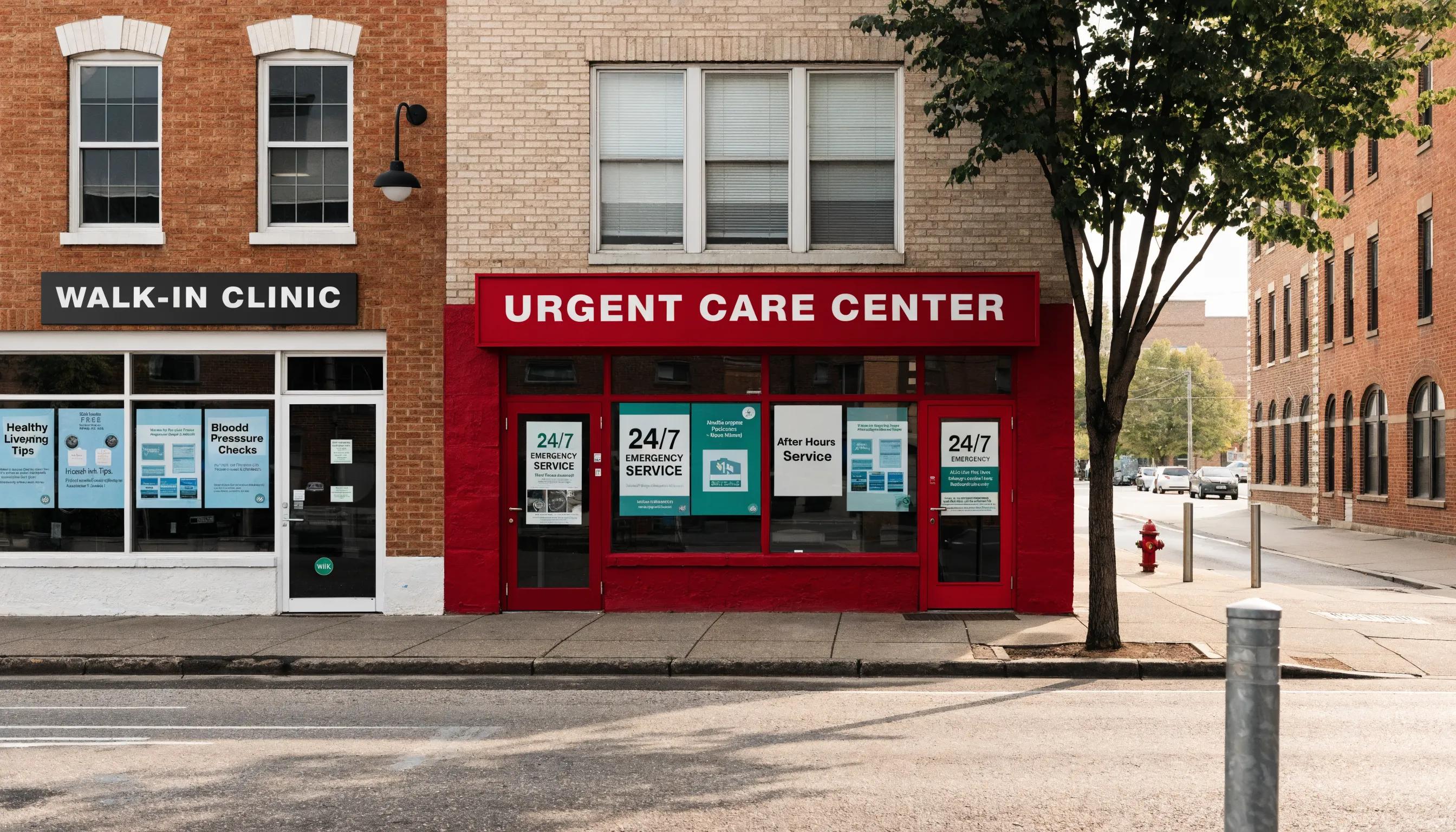 When comparing costs, walk-in clinics typically offer a lower pricing structure compared to urgent care centers. Walk-in clinics focus on basic medical needs, such as minor illnesses, while urgent care facilities provide a broader spectrum of services, including on-site X-rays and lab tests. Due to these expanded services, urgent care centers often charge higher fees. Individuals should evaluate their medical needs carefully to determine the best facility for their circumstances.
Is Urgent Care Cheaper Than the ER for Uninsured Patients?
Yes, urgent care is typically a far more affordable alternative for uninsured patients than emergency room care. The average price difference can be substantial, with patients potentially saving hundreds of dollars by opting for urgent care instead of the ER for non-critical health issues. This choice emphasizes the importance of choosing the right healthcare pathway based on one’s immediate needs.
Facility Fees and Payment Expectations
Patients should be aware that urgent care facilities often charge additional facility fees on top of consultation charges. These fees can vary among providers and may cover the costs of the facility's operational expenses. Before receiving care, individuals are encouraged to inquire about payment expectations and any applicable facility fees to prepare financially for their visit.
 What Are Your Urgent Care Self-Pay Payment Options?
For those planning to pay out-of-pocket for urgent care, several self-pay options are available. Understanding these payment methods can help patients select the most suitable financial strategy when seeking medical assistance.
Can You Negotiate Urgent Care Prices as a Self-Pay Patient?
Yes, many urgent care facilities are open to negotiating urgent care prices with self-pay patients. It's advisable for patients to discuss their financial situation upfront, as some facilities may offer reduced rates or payment plans for those facing high medical costs. If you are asking how much is an urgent care visit without insurance, part of the answer is whether you are willing to negotiate your cost. Remember that if you pay cash, it makes the billing process for the urgent care clinic is easier, and reduces their work hours. So, it is beneficial for them when you pay cash.
How To Budget Healthcare Costs Without Insurance Effectively?
Budgeting for healthcare costs without insurance requires a proactive approach. Individuals should estimate potential urgent care expenses based on average costs in their area and set aside funds accordingly. Utilizing resources like healthcare budgeting tools can significantly aid in managing these costs, ensuring that families are better prepared for unexpected medical needs.
Common Procedures & Add-On Costs Without Insurance
Understanding what specific medical procedures cost helps you avoid surprise charges during your visit.
X-Ray & Imaging Costs
If you slip on ice or take a hard fall, you may need an X-ray to confirm whether a bone is broken or simply sprained.
In an urgent care setting, a standard 2-view X-ray (such as an ankle, wrist, or chest series) typically costs between $80 and $200 as a self-pay add-on to your base consultation. The clinic fee usually covers both the radiologic technologist acquiring the image and the attending clinician interpreting it. In some cases, if the clinic sends the digital file to an off-site radiologist for an over-read, you may receive a secondary professional reading fee of $20 to $50.
Stitches & Wound Closure
Deep cuts that do not stop bleeding after 10 minutes of direct pressure or that reveal yellow fatty tissue usually require medical closure.
Urgent care wound closure costs depend on the length, depth, and anatomical location of the cut:
- Liquid Tissue Adhesive (Dermabond): $120 – $200 total visit cost
- Simple Sutures or Staples (1 to 4 stitches): $175 – $300 total visit cost
- Complex Multi-Layer Suturing (5+ stitches or deep muscle involvement): $300 – $450+ total visit cost
Compared to an emergency room—where getting three stitches can easily result in a $2,000 bill—urgent care is dramatically more cost-effective for everyday lacerations.
Lab Tests, Blood Panels & STI Screenings
Most urgent care clinics maintain CLIA-waived point-of-care laboratories on site, allowing them to deliver results within 10 to 20 minutes:
- Urinalysis (UTI check): $20 – $40
- Rapid Strep Swab: $25 – $45
- Rapid Flu / COVID-19 PCR/Antigen: $30 – $75
- Comprehensive STI/STD Screening Panels (Blood + Urine): $120 – $250
- Blood Chemistry Panels (CBC, CMP, Lipid): $50 – $130
Prescription Medications & Injections
If you need immediate symptom relief, the clinic may administer an intramuscular (IM) or intravenous (IV) medication on site, such as a Toradol injection for severe pain, Rocephin for bacterial infection, or Zofran for unrelenting nausea. These injections typically add $40 to $80 each to your bill.
For take-home prescriptions (like oral antibiotics, inhalers, or anti-inflammatories), many clinics offer pre-packaged dispensing at the front desk. While convenient, in-clinic dispensing can be marked up significantly. Unless you have no transportation, it is almost always cheaper to ask the clinician to send an electronic prescription to a local pharmacy (such as Walmart, Costco, or a grocery store pharmacy) and apply a digital coupon like GoodRx.
Payment Options, Financial Assistance & Payment Plans
When you visit urgent care without insurance, you have several avenues to make your visit manageable.
Cash Payment
Because processing insurance claims costs medical providers significant time, administrative staffing, and billing rejections, clinics love self-pay patients who pay immediately.
Always ask the front desk: "Do you offer a prompt-pay or cash discount for uninsured patients?" Many corporate and independent urgent care chains will automatically apply a 10% to 30% reduction to both the base fee and diagnostic services when paid at the time of service.
Formal Installment Plans & Medical Credit
If your total visit cost exceeds what you have in your checking account, inquire about structured payment arrangements:
- In-House Payment Plans: Many clinics will allow you to place a deposit down (typically $50 to $100) and divide the remaining balance into equal monthly installments over 3 to 6 months without interest.
- Medical Credit Cards (CareCredit): Most large urgent care chains accept CareCredit or similar medical financing programs. These cards frequently offer promotional zero-interest repayment periods (e.g., 6 to 12 months) if paid in full within the promotional window.
Sliding-Scale Fees at Community Health Centers (FQHCs)
If private urgent care rates are completely out of reach, look for a Federally Qualified Health Center (FQHC) or a Community Health Center in your area. FQHCs receive federal grant funding to provide comprehensive primary and immediate walk-in care to underserved populations.
They use a sliding-fee scale tied to Federal Poverty Guidelines (FPG). Depending on your documented household income and family size, a visit that costs $200 at a private clinic might cost as little as $20 to $50 at an FQHC. You can find local centers through the official Health Resources and Services Administration (HRSA) locator tool at .
What to Bring & Expect at Your Visit
Walking into an urgent care clinic without insurance is routine for clinic staff. Knowing what to prepare will help your visit go smoothly and avoid administrative delays:
Essential Items to Bring
- Government-Issued Photo ID: Driver's license, passport, state ID, or consular ID.
- Form of Payment: Credit card, debit card, HSA/FSA card, or cash.
- Complete Medication List: Names and dosages of any daily prescription medications, over-the-counter supplements, or inhalers you currently take.
- Medical History Notes: A brief written summary of known allergies, chronic conditions (e.g., diabetes, hypertension), and prior surgeries.
What Happens at Check-In
When you step up to the reception desk, state clearly: "I am self-paying today without insurance." The staff will hand you standard medical intake forms along with a Self-Pay Financial Agreement.
Most private clinics require payment of the base fee (or a standard deposit, typically $100 to $150) before you are taken back to an exam room. If the doctor determines you need an X-ray or procedure, the clinical assistant will generally inform you of the additional cost before proceeding.
Key Questions to Ask During Your Visit
Advocate for your wallet while receiving quality care by asking three straightforward questions:
- What is the estimated total cost of this recommended test or procedure before we do it?
- Are there alternative diagnostic steps or over-the-counter options we can try first?
- Can you send my prescription to a retail pharmacy as a generic medication rather than dispensing brand-name pills here?
How Can Medblue Membership Plans Help Lower Urgent Care Expenses?
MedBlue can significantly reduce the costs associated with urgent care for uninsured patients. By enrolling in a MedBlue plan, you get access to discounted rates on urgent care facilities as well as primary care doctors, X-rays, dental care, optometrists, prescriptions, and you also get access to free telehealth. So if you have cold and flu-like symptoms and not a medical emergency, you can arrange a virtual visit with a doctor at no extra cost. They can tell you if you need to go to an in-person medical visit or provide you with a prescription.
The enrollment process for MedBlue is straightforward. You can sign up online or reach out to the friendly customer support team.
FAQs
The following are some important urgent care questions that we receive frequently. If they don't answer your questions, feel free to connect with a friendly member of the support team, they are happy to answer your questions.
Will an urgent care turn me away if I can't pay upfront?
Yes, private urgent care centers can legally decline to provide service if a patient cannot pay the required base fee or deposit at check-in. Urgent care centers are not hospital emergency departments and are not bound by the federal EMTALA mandate. If you are experiencing a life-threatening medical emergency, urgent care staff will call 911 to transport you to the nearest hospital emergency room.
Is it cheaper to pay cash at urgent care than use a high-deductible insurance plan?
In many cases, yes. If you have a high-deductible health plan (HDHP) with a $3,000 to $7,000 deductible that you haven't met, your insurer will apply the clinic's contracted rate toward your deductible, which you must pay out of pocket. Often, the clinic’s cash-pay or prompt-pay discount price is lower than the insurance company’s negotiated rate for the same basic evaluation.
Do urgent care centers offer payment plans?
Many urgent care clinics offer internal installment agreements or partner with medical financing services like CareCredit. Policies vary by location and ownership, so it is best to ask the front desk about payment plan eligibility before treatment begins.
Can I negotiate my urgent care bill after the visit?
Yes. If you receive an unexpected bill for ancillary tests or outside lab processing, contact the clinic’s billing department immediately. Politely explain that you are an uninsured self-pay patient, ask for an itemized bill to check for duplicate codes, and ask if they can apply a retroactive cash-pay discount or settle the account for a reduced lump-sum payment.