October 25, 2026
How Much Is Accutane Without Insurance?
The cost of Accutane out of pocket can range from $200 to $400 per month. While you might be looking up how much is Accutane without insurance, you should know that the brand Accutane no longer exists. Accutane is the discontinued brand name for isotretinoin, a powerful oral medication reserved for severe, cystic, or treatment-resistant acne.
Today, isotretinoin is sold as a generic version and under a variety of other brand names like Absorica, Claravis, and Myorisan. However, most people still refer to isotretinoin as Accutane, much like people refer to paper tissue as Kleenex or bandages as Band-Aids. So, in this article, we will refer to isotretinoin by its colloquial name Accutane, but when you go to make a purchase, the name for it can vary.
 The Accutane cost without insurance extends far beyond the prescription itself, and most treatments last from 4 to 9 months. Total monthly expenses depend on the strength of the Accutane you are prescribed and where you are making the purchase. Costs can also vary between brand and generic versions. Brand-name options like Absorica, Claravis, and Myorisan cost approximately $300 to $600 per month out of pocket, while generic isotretinoin can be $200 to $400 per month.
Total Monthly Cost of Accutane Makeup
Three core components determine the full monthly expense. Prescription pills form the base cost. Monthly doctor visits add provider fees. Mandatory lab tests and pregnancy monitoring create additional charges. Without insurance, each element must be paid out of pocket.
Prescription Pills
Generic isotretinoin costs $200to $400 per month, depending on pharmacy and dosage strength. Brand-name versions such as Absorica, Claravis, and Myorisan run higher, approximately $300 to $600 per month. The pill cost alone forms the foundation of the total monthly bill.
Doctor Visits
Monthly dermatologist appointments are required throughout treatment to monitor side effects, track progress, and adjust dosage when needed. Each visit adds a recurring provider fee on top of the prescription cost, and these appointments cannot be skipped under the treatment protocol.
Lab Tests and Pregnancy Monitoring
Mandatory blood work and pregnancy tests, required under the FDA's iPLEDGE program, create additional charges every month of treatment. These tests check liver function, cholesterol levels, and pregnancy status, and they accumulate steadily over a multi-month course.
If you don't have insurance, you can use a health insurance alternative plan like MedBlue's monthly subscription, which gives you affordable online doctor visits as well as discounts on visits with a dermatologist, blood tests, and prescriptions. So, all of that reduces your cost when you don't have insurance.
Monthly Accutane Cost Breakdown
Here's a quick look at the three components that make up the total monthly cost of Accutane (isotretinoin) treatment:
Cost Component | What It Covers | Typical Monthly Cost |
|---|---|---|
Prescription Pills | Generic isotretinoin or brand-name versions like Absorica, Claravis, and Myorisan | $200 - $600 |
Doctor Visits | Required monthly dermatologist appointments to monitor side effects and adjust dosage | Provider visit fee (varies by practice) |
Lab Tests & Pregnancy Monitoring | Mandatory blood work and pregnancy tests required under the FDA's iPLEDGE program | Added monthly lab charges based on where you get them. |
How Does Isotretinoin Work
Isotretinoin shrinks the skin's oil glands and reduces inflammation. The drug also normalizes skin cell shedding inside pores. These combined effects stop the cycle of deep, scarring breakouts that define severe acne. The medication delivers transformative results for many severe acne sufferers. Patients who struggled for years with painful, deep cysts often achieve long-term clearance after a single course. This outcome explains why individuals continue to seek the treatment despite its strict monitoring requirements and high cost.
Who qualifies for Accutane treatment?
Candidates typically have nodular or cystic acne that causes scarring. A history of failed treatments with oral antibiotics and prescription topicals is common. A virtual dermatologist appointment can be one of the least expensive ways of getting a consultation with a dermatologist. With online dermatologist appointments, you get the same access to a qualified doctor, but online costs are often much lower than in-person ones. Doing the first consultation online reduces your initial costs, but you will still need in-person blood tests and pregnancy tests if you qualify for the treatment.
 A man is at the counter of a pharmacy.
Different Types of What You Call Accutane
The original brand-name Accutane is no longer manufactured. Patients now receive isotretinoin through several FDA-approved generic versions or specialized brand-name alternatives. Each option carries a different Accutane price without insurance, making the terminology important for anyone paying out of pocket.
Versions of Isotretinoin
Isotretinoin is sold under its own generic name and under brand names like Absorica, Claravis, Amnesteem, and Zenatane. Costs for the generic version can range from $200 to $400, while brand-name versions can be higher and range from $300 to $600.
Fat Requirements for Absorption
Accutane typically requires a high-fat diet for your body to absorb the treatment, but Absorica and Absorica LD offer unique formulations that some dermatologists prefer for specific cases, as the fat requirement is mixed into the capsules. The higher Accutane cost without insurance for these versions reflects their patented delivery systems. Patients evaluating how much does accutane cost without insurance should compare both generic and brand-name pricing before filling a prescription.
How Does the Medicine Work?
Isotretinoin, the active ingredient in Accutane, targets severe acne at its source. The medication suppresses sebaceous gland activity, which reduces oil production in the skin. Less oil means fewer clogged pores and a dramatically lower chance of cystic breakouts.
Most topical creams and antibiotics only address surface-level bacteria or inflammation. Isotretinoin works systemically by shrinking the oil glands themselves. This fundamental change explains why results often last long after the treatment course ends.
How Long is an Accutane Treatment
Treatment often lasts several months. The total Accutane cost without insurance depends on cumulative dosing and ongoing medical requirements. Monthly monitoring adds to the overall expense, but the long-term clearance rate makes the investment worthwhile for many patients.
The medication also normalizes keratinization inside hair follicles. Dead skin cells shed properly instead of clumping together and forming blockages. Additionally, isotretinoin inhibits acne-causing bacteria by eliminating the oily environment those bacteria need to thrive. These combined effects create a powerful, multi-pronged attack on persistent acne.
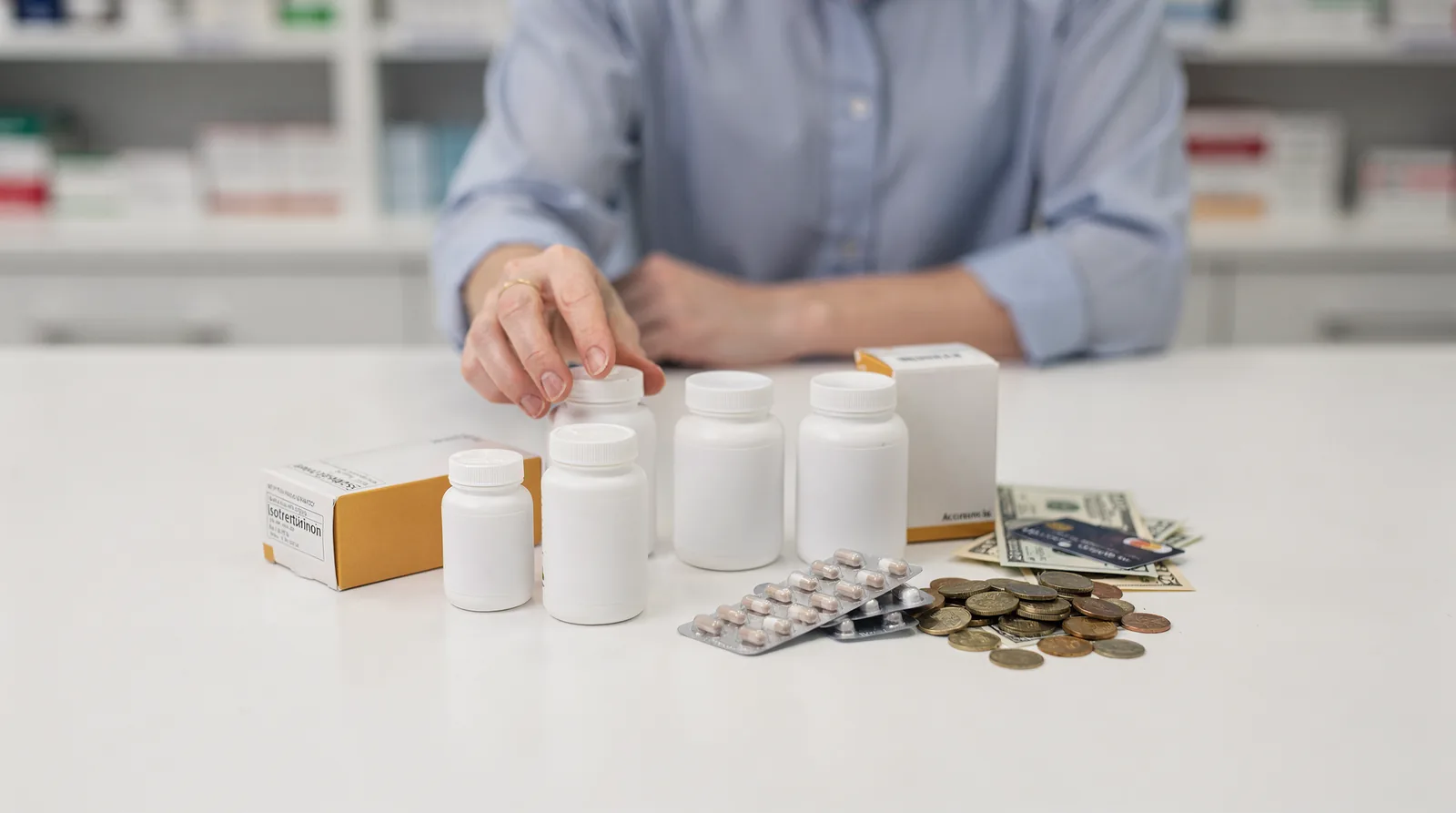 Pills and money sit on a counter.
Who Prescribes the Medicine and When Is It Prescribed?
Dermatologists, certain physicians, and licensed physician assistants or nurse practitioners working under their supervision can prescribe isotretinoin. The medication is reserved for severe, treatment-resistant acne. Accutane is usually prescribed after other acne treatments have not worked. This means patients typically exhaust options like topical creams and oral antibiotics first.
The clinical threshold is high. Candidates present with deep cystic acne, scarring risk, or persistent nodules that fail to respond to standard care. A prescription is not issued casually.
Safety Requirements While on Accutane
Isotretinoin's effectiveness comes with serious safety requirements that every patient must follow throughout treatment. These rules exist to protect patients from the medication's known risks, particularly birth defects and liver strain, and they are non-negotiable under the FDA's monitoring program.
- Enroll in and follow iPLEDGE. Every patient, prescriber, and pharmacy must participate in this federal risk-management program for the full course of treatment.
- Complete monthly blood work. Routine labs track liver function and cholesterol levels, since isotretinoin can affect both.
- Confirm pregnancy status monthly. Patients who can become pregnant must take monthly pregnancy tests and use two forms of effective contraception, as isotretinoin causes severe birth defects.
- Avoid vitamin A supplements. Isotretinoin is a vitamin A derivative, so additional supplements raise the risk of toxicity.
- Limit alcohol intake. Alcohol places extra strain on the liver during a course that already requires liver monitoring.
- Protect skin from sun exposure. The medication increases sun sensitivity, so daily sunscreen and sun avoidance help prevent burns and irritation.
- Never share the medication. Isotretinoin is prescribed and monitored on an individual basis, and sharing it bypasses the safety checks built into the program.
Keeping up with these requirements adds to the monthly cost of treatment, but skipping them is not an option under the prescribing protocol.
What Is the iPLEDGE Program?
iPLEDGE is the FDA-mandated risk evaluation and mitigation strategy (REMS) created specifically for isotretinoin. Because the medication causes severe birth defects and carries other serious risks, the FDA requires every prescriber, pharmacy, and patient to enroll in iPLEDGE before a single pill is dispensed. The program exists to make sure the drug's risks are tracked and managed consistently, no matter who prescribes it or where it is filled.
How Enrollment Works
Prescribers must certify with iPLEDGE and confirm that patients understand the risks before writing a prescription. Pharmacies must also be registered in the system, and they cannot dispense isotretinoin without verifying the patient's current iPLEDGE status. Patients create their own iPLEDGE account and complete required steps each month, including an online questionnaire, before a prescription can be released.
Monthly Requirements Under iPLEDGE
Every patient enrolled in iPLEDGE must meet a recurring set of checkpoints each month of treatment:
- Complete the monthly iPLEDGE questionnaire confirming understanding of the risks.
- Patients who can become pregnant must take a monthly pregnancy test through a certified lab.
- Two forms of effective contraception are required for patients who can become pregnant, verified monthly.
- Prescriptions must be picked up within a strict window, typically 7 days from the evaluation, or the prescription expires and the process restarts.
These requirements add real time and cost to each month of treatment, but they cannot be waived. Missing a single step, a late pickup window, or a skipped questionnaire can delay access to the next month's prescription, which is why patients budgeting for Accutane cost without insurance should factor the monitoring requirements into their overall treatment timeline, not just the price of the pills themselves.
How Health Insurance Alternatives Can Reduce Accutane Costs
 Person with acne having a telehealth video consultation with a dermatologist
Health insurance alternatives slash the out-of-pocket burden of Accutane cost without insurance. Membership-based health plans and discount programs replace traditional coverage gaps. Patients avoid the full retail price of monthly dermatology visits, lab panels, and pharmacy fills.
Health Insurance Alternative Plans That Can Reduce Cost
Medblue provides a subscription membership with $0 telehealth visits and discounted in-person visits with a dermatologist. The plan includes lab and imaging savings of up to 60% off standard rates. Those discounts directly reduce the mandatory blood work required during isotretinoin treatment. The plan also offers a discount prescription card for lower costs on the prescription itself when you don't have insurance. A single membership starts at $59 per month with no enrollment fee and same-day benefit activation.
Can telehealth replace in-person dermatologist visits for Accutane?
Telehealth platforms connect patients with licensed providers for consultations. This model eliminates the overhead of brick-and-mortar clinics.
Discount programs like GoodRx and SingleCare negotiate lower pharmacy prices for generic isotretinoin. Direct-pay dermatology practices offer flat monthly fees that bundle visits and basic labs. Comparing these options to traditional insurance reveals substantial savings. A detailed breakdown of membership models appears in this MedBlue vs. Mira vs. Florida Health comparison. Patients seeking Accutane price without insurance relief find that stacking a membership plan with a prescription discount card cuts total treatment costs by hundreds of dollars each month.
Next Steps
Managing severe acne without insurance creates financial pressure, but you can reduce your costs when you don't have insurance by using health insurance alternatives to reduce your costs. Your costs include not only the pills themselves but dermatologist consultations, monthly blood work, and pregnancy tests. All of those things factor into the cost of Accutane without insurance. If you want to learn about the MedBlue plan, which reduces costs, head over to the pricing page. You can also chat with MedBlue's amazing dermatology team, and they can help you figure out the best way to get your treatment at an affordable rate.
FAQs
How much does Accutane cost without insurance?
Without insurance, monthly expenses for medication and clinical monitoring range from $200 to over $1,000. The Accutane price without insurance shifts with dosage strength. Higher doses require more capsules, which raises pharmacy costs. Location and provider choice also affect the final bill.
How to get prescribed Accutane?
A licensed dermatologist evaluates severe or treatment-resistant acne before prescribing isotretinoin. Patients must complete monthly visits, lab tests, and pregnancy monitoring throughout the course. These requirements add to the overall treatment expense.
Can lab testing costs be reduced without insurance?
MedBlue offers transparent pricing for routine diagnostics starting with pre-negotiated discounts. These rates sit well below national averages. Patients pursuing how to get prescribed Accutane can use such services to lower the monitoring costs that accompany treatment.
What are effective Accutane alternatives?
Topical retinoids, oral antibiotics, and hormonal therapies serve as common Accutane alternatives for moderate acne. A healthcare provider determines the best option based on acne severity and treatment history.
How can someone get prescribed Accutane without insurance?
A licensed dermatologist must evaluate the patient's condition before writing a prescription. The process typically begins with a consultation where the provider reviews the patient's acne history and confirms that other treatments have failed. Monthly follow-up appointments remain mandatory throughout the course of treatment.
What is the active ingredient in Accutane?
Isotretinoin is the active ingredient in what was called Accutane. Now, Accutane the brand has been discontinued, but isotretinoin is available as a generic product and under other brand names like Absorica and Claravis.
Why does the brand name still get used?
Accutane became shorthand for isotretinoin treatment over decades of use. Doctors and patients often say "Accutane" when they mean isotretinoin, even though the original brand no longer exists. Understanding this naming gap helps uninsured patients compare pharmacy prices accurately and avoid overpaying for a discontinued label.
What safety program is required for a prescription?
Every patient must enroll in the FDA-mandated iPLEDGE program. This risk management system enforces strict monthly protocols. Monthly dermatologist visits and lab work are non-negotiable components. The program aims to prevent pregnancy and monitor serious side effects through regular blood tests.
How do patients access the medication without traditional insurance?
Patients seeking how to get prescribed Accutane without insurance benefit from exploring alternative care models. A structured guide on getting prescriptions without insurance outlines membership-based and discount pathways that bypass traditional plan restrictions.